Run and Gun Pro Rig: The Complete Build List
Short answer
The pro run and gun build costs $19,008.15 complete, built around a Sony FX6 at around $7,000. What the money buys is not a better picture, it is built-in electronic ND, timecode, wireless monitoring and body support, all of which remove accessories rather than add them.
At $19,008.15 this is a working professional's kit rather than an enthusiast build, and the thing to understand about it is that most of the money makes the rig simpler rather than more capable. The Sony FX6 at about $7,000 has electronic variable ND, two full size XLR inputs and timecode built into the body, which deletes three accessories, three cables and three ways for a day to go wrong.
If you have not read the working tier, start there. This build keeps its logic and replaces the parts that limit a professional day.
Who this build is for
You shoot documentary, branded or broadcast work for money, most weeks. You sometimes hire a sound recordist or a second operator. Clients attend your shoots. You cannot afford a body that overheats, a battery that dies, an audio track with no timecode, or a back that gives out at 4pm on the second day of a three-day shoot.
Nobody starting out should buy this list. It is not a better version of the starter rig, it is a different economic proposition: it assumes the gear is being paid for by the work, and it assumes the operator's time and body have real value.
The build list
Run and gun, pro tier
Build total
$19,008.15
Camera and lens
Internal ND is the feature that separates a documentary body from a rigged mirrorless. It removes an entire category of rigging.
| Item | Why this one | Price | Buy |
|---|---|---|---|
| Sony FX6 Sony Electronic variable ND, full size XLR inputs and timecode built in, so the rig gets simpler as the work gets harder. Compare: cinema cameras | Electronic variable ND, full size XLR inputs and timecode built in, so the rig gets simpler as the work gets harder. | $6,998 | Price |
| Sony FE 24-70mm f/2.8 GM II Sony The standard zoom stays. At this tier it is the lens that lives on the camera. Compare: video lenses | The standard zoom stays. At this tier it is the lens that lives on the camera. | $2,448 | Price |
| Sirui Night Walker S35 T1.2 Cine Set (24, 35, 55mm) Sirui A manual set for the controlled parts of a documentary day, interviews and inserts. Compare: cine lenses | A manual set for the controlled parts of a documentary day, interviews and inserts. | $749 | Price |
| Camera and lens subtotal | $10,195 | ||
Rigging and support
| Item | Why this one | Price | Buy |
|---|---|---|---|
| Tilta Camera Cage Basic Kit for Sony FX6 Tilta ARRI rosettes and 15mm rod support on a body that already has a handle, which is what accessories actually hang from. Compare: cages | ARRI rosettes and 15mm rod support on a body that already has a handle, which is what accessories actually hang from. | $159 | Price |
| SmallRig Baseplate Kit with 15mm Rod Clamp SMALLRIG Rods first. Every front accessory depends on them. | Rods first. Every front accessory depends on them. | $28.04 | Price |
| SmallRig 15mm Carbon Fibre Rods, 12 inch pair SMALLRIG Carbon saves weight where it hurts most, out on the end of a lever. | Carbon saves weight where it hurts most, out on the end of a lever. | $21.24 | Price |
| Tilta Float Dual Handle Support System Tilta A spring arm and vest, which is how a long handheld day stops ending in back pain. Compare: shoulder rigs | A spring arm and vest, which is how a long handheld day stops ending in back pain. | $1,299 | Price |
| Rigging and support subtotal | $1,507.28 | ||
Movement
| Item | Why this one | Price | Buy |
|---|---|---|---|
| DJI RS 4 Pro DJI 4.5 kg of rated payload, which is what a loaded documentary body needs once a monitor and a transmitter are attached. Compare: gimbals | 4.5 kg of rated payload, which is what a loaded documentary body needs once a monitor and a transmitter are attached. | $869 | Price |
| Tilta Lightweight Dual Handle Gimbal Support Tilta Spreads the gimbal across both arms, which steadies low mode far more than any motor setting. Compare: shoulder rigs | Spreads the gimbal across both arms, which steadies low mode far more than any motor setting. | $209 | Price |
| Movement subtotal | $1,078 | ||
Monitoring
| Item | Why this one | Price | Buy |
|---|---|---|---|
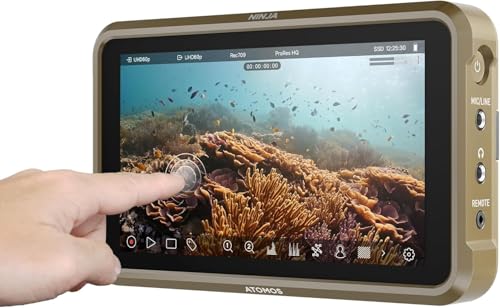
| Atomos Ninja 5.2-inch Atomos ProRes recording and a bright panel in one, which sidesteps internal codec limits on any second body. Compare: recorders | ProRes recording and a bright panel in one, which sidesteps internal codec limits on any second body. | $589 | Price |
| Hollyland Pyro H HollyView A picture to the director at 1300 ft line of sight, which is what stops people standing behind the operator. Compare: transmitters | A picture to the director at 1300 ft line of sight, which is what stops people standing behind the operator. | $369 | Price |
| FEELWORLD FW703 7-inch 3G-SDI Monitor FEELWORLD The receiving end of that link, in a size a client will actually look at. Compare: monitors | The receiving end of that link, in a size a client will actually look at. | $199.99 | Price |
| Monitoring subtotal | $1,157.99 | ||
Sound
At this tier a sound person may join you, and the kit has to be one they are willing to be handed.
| Item | Why this one | Price | Buy |
|---|---|---|---|
| Sound Devices MixPre-3 II S Three high quality preamps with timecode support, which is the recorder a professional will accept. Compare: recorders | Three high quality preamps with timecode support, which is the recorder a professional will accept. | $995 | Price |
| Rode NTG5 Kit Rode An unusually clean off-axis response, which is what makes a boom workable outdoors. Compare: shotgun mics | An unusually clean off-axis response, which is what makes a boom workable outdoors. | $485 | Price |
| Rode Wireless PRO Rode Timecode in the transmitters, so multicam syncs without a box per camera. Compare: wireless mics | Timecode in the transmitters, so multicam syncs without a box per camera. | $249 | Price |
| Tentacle Sync E MKII (Standard Set) SUAREA Two units and the cables that actually fit, which is where most timecode purchases quietly fail. Compare: timecode | Two units and the cables that actually fit, which is where most timecode purchases quietly fail. | $399 | Price |
| Sound subtotal | $2,128 | ||
Power and media
| Item | Why this one | Price | Buy |
|---|---|---|---|
| Anton Bauer Titon Micro 90 V-Mount Anton Bauer The brand rental houses standardise on, which matters when a battery gets dropped on concrete for years. Compare: batteries | The brand rental houses standardise on, which matters when a battery gets dropped on concrete for years. | $308.75 | Price |
| SmallRig VB212 V-Mount, 212Wh SMALLRIG 212 Wh for vehicle and studio days where nothing has to fly. Compare: batteries | 212 Wh for vehicle and studio days where nothing has to fly. | $329.25 | Price |
| Angelbird AV PRO SE CFexpress B v4 512GB Angelbird Specified for sustained rather than burst write, which is the number that decides whether a long take drops frames. Compare: cards | Specified for sustained rather than burst write, which is the number that decides whether a long take drops frames. | $399.99 | Price |
| OWC Envoy Ultra 2TB Thunderbolt 5 OWC Fast enough to edit straight off the drive, which removes a copy step from every day. Compare: SSDs | Fast enough to edit straight off the drive, which removes a copy step from every day. | $699.99 | Price |
| Power and media subtotal | $1,737.98 | ||
Sticks and transport
| Item | Why this one | Price | Buy |
|---|---|---|---|
| Manfrotto 504X Fluid Head with 645 Fast Twin Tripod Manfrotto A 75mm bowl system with continuous counterbalance, which is the rental-house answer for a loaded build. Compare: tripods | A 75mm bowl system with continuous counterbalance, which is the rental-house answer for a loaded build. | $999 | Price |
| Pelican Vault v525 Case with Padded Dividers Pelican Two cases is normal at this tier. This is the one that carries the camera. | Two cases is normal at this tier. This is the one that carries the camera. | $189.95 | Price |
| Movo CRC11 Camera Rain Cover Movo Still the cheapest insurance in the kit. | Still the cheapest insurance in the kit. | $14.95 | Price |
| Sticks and transport subtotal | $1,203.90 | ||
Complete build, everything above
23 line items across 7 groups. Every line is priced.
$19,008.15
Monitoring becomes a system, not a screen
The monitoring chain
Operator monitor and recorder on the camera, a transmitter sending the picture out, and a bright seven inch panel where the client stands.
Atomos
Atomos Ninja 5.2-inch
Monitor and ProRes recorder in one, which sidesteps a camera's internal codec limits and gives an edit-friendly file straight off the card.
- Size
- 5.2 in
- Codec
- ProRes
The pick when the body records only long-GOP internally.
Check price
HollyView
Hollyland Pyro H
Dual-band with a 1300 ft line-of-sight rating, which in practice means it holds up across a real location rather than across a table.
- Range
- 1300 ft LOS
- Signal
- HDMI
The value pick for client monitoring.
Check price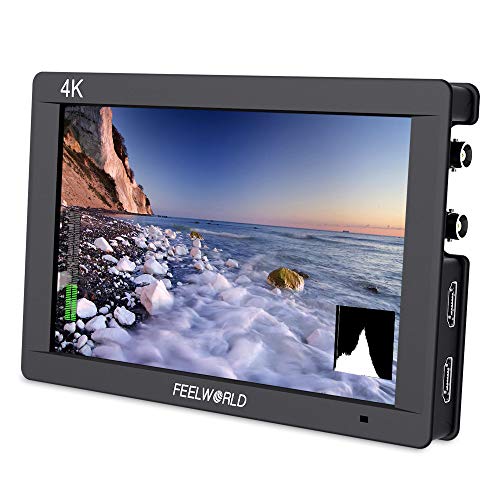
FEELWORLD
FEELWORLD FW703 7-inch 3G-SDI Monitor
SDI in and out at seven inches, which is what a director's monitor needs when the camera speaks BNC and the run is long.
- Input
- 3G-SDI and HDMI
The Hollyland Pyro H is rated at 1300 ft line of sight, which in practice means a real location rather than a room. That range figure is always measured with clear line of sight and no interference, so treat published numbers as an upper bound and expect meaningfully less through walls and bodies. See the wireless monitoring guide for how to plan around that honestly.
The Atomos Ninja 5.2-inch stays on the camera even though this body records excellent files internally, for one reason: it is a bright panel with scopes that also happens to record a backup. On a job where a card failure is not recoverable, a second simultaneous recording is cheap insurance.
Sound at the level a professional will accept
The Sound Devices MixPre-3 II is not on this list because it sounds better than a $300 recorder in a way an audience notices. It is here because a sound recordist you hire for a day will pick it up and work, without a conversation about why the gain structure is odd or where the timecode input is. Gear other professionals accept is what lets you scale a shoot for a day without hiring their kit too.
The Rode Wireless PRO carries timecode in the transmitters, and the Tentacle Sync E MKII (Standard Set) covers the cameras. Between them, everything on the shoot shares a clock. That turns the first hour of an edit from a syncing exercise into an assembly, on every single job, forever. Read the timecode guide for jam sync procedure and how drift actually behaves.
Support: the least visible, most valuable purchase
The Tilta Float Dual Handle Support System is a spring arm and vest system. It is expensive, it is not in any shot, and the people who own one describe it as the purchase that changed how many days a year they can work. A loaded documentary rig held at eye level for an eight hour day is a load your spine pays for later. The arm moves it to your hips.
The same logic drives the Tilta Lightweight Dual Handle Gimbal Support for gimbal work. A gimbal held on one grip is a lever; the same gimbal on a dual handle bar is shared across both arms and steadier in low mode. Neither of these makes the picture better in a single shot. Both make the tenth hour of shooting look like the first.
What you can skip, even here
- The cine prime set, about $750. Only if your work never includes controlled interview setups. If it does, a manual set is what makes those sequences cut against the run and gun material rather than clashing with it.
- The 212 Wh battery, about $330. Skip it if you fly to most jobs. It cannot travel in a carry-on and it will spend its life in a studio.
- The Thunderbolt SSD, about $700. A cheaper USB drive offloads fine. This one exists so you can edit off it without a copy step, which only pays if you also edit.
What you must not skip
Timecode, and the second battery. Timecode because syncing by hand on every job is a recurring cost that this equipment eliminates permanently. The second battery because everything on this rig now runs from one source, and a single point of failure with no spare is the one design flaw a professional kit cannot have.
Media at pro volume
The Angelbird AV PRO SE CFexpress B v4 512GB is specified for sustained rather than burst write, which is the number that decides whether a long take drops frames. Peak figures on a card box describe a short burst; a forty minute interview at high bitrate is a sustained load, and that is a different specification entirely.
Plan the day on the storage calculator and the bitrate and card speed calculator. A two camera interview day at 240 Mbps generates roughly 216 GB per hour of combined footage, which is most of a 512 GB card before lunch.
What this build deliberately does not include
No matte box, no follow focus, no lighting package, no C-stands. Those belong on the narrative pro build, and adding them here would make the rig slower without making the work better. A documentary operator who stops to fit a matte box has already missed the thing they were there to film.
The exception, and it is a real one, is a small lighting kit for interview setups. If half your days are sit-down interviews, take the two light package from the narrative working build and add it to this list. That is a genuinely hybrid working pattern and it deserves an honest answer rather than a rule.
Next, from here
- All six builds compared
Both ladders, three tiers each, totals side by side.
- Narrative pro build
What the same money buys on a scripted set.
- Timecode and sync guide
Jam sync, free run and drift in practice.
- Best wireless video systems
Range figures and what they mean on a real location.
- Best field recorders
From 32-bit float two-track to a full mixer.
- Run and gun workflow
How the rig is actually operated across a day.
Common questions
- What makes a camera a documentary body rather than a rigged mirrorless?
- Three built-in features: electronic variable ND, full size XLR inputs, and timecode in and out. Each one removes an accessory, a cable and a failure point. A rigged mirrorless can match the picture, but it needs a filter on the lens, a recorder or adapter for sound, and a timecode box on the shoe to do the same job.
- Is internal ND really worth thousands of dollars?
- On a documentary day, yes. Electronic ND changes density with a wheel while the camera rolls, so you follow a subject from a window to a hallway without stopping. A screw-on variable ND requires stopping, unscrewing and rethreading, and you lose the moment. If your work is planned and static, this argument does not apply to you.
- Why add a body support vest at this tier?
- Because a full day of handheld work with a loaded rig damages people over time, and that is a durability problem rather than a comfort one. A spring arm and vest takes the load off the shoulder and spine and transfers it to the hips. Operators who add one usually describe it as the purchase that extended their working life, not one that improved a shot.
- Do I need wireless video if I work alone?
- Yes, once clients are present. The alternative is people standing behind you looking over your shoulder, which changes where you can put the camera and how you move. A transmitter and a bright seven inch monitor gives them a place to stand that is not in your shot, which is worth more than the picture quality it delivers.
- How much of this build is about hiring other people?
- A meaningful part of it. A professional recorder, timecode on every device and a wireless feed are what let you bring in a sound recordist or a second operator without them having to work around your kit. Gear that other professionals will accept is what turns a one-person operation into something that can scale for a day.
- What is the single most overrated item at this tier?
- The biggest gimbal. A 4.5 kg rated stabiliser is heavier than the 3 kg class, so the operator fatigue problem grows exactly as fast as the payload problem shrinks. Buy it only if your build genuinely exceeds the smaller class, and buy the support vest at the same time or you will not use it for long.
Totalling your own rig weight against your gimbal payload? The Camera Rig Build Planner is the paid version of these pages: 8 printable worksheets you fill in with your own numbers, plus the full PDF, $29.