Media Storage Calculator: Gigabytes Per Hour of Footage
Short answer
Gigabytes per hour equals the bitrate in Mbps multiplied by 3,600 and divided by 8,000. A 240 Mbps codec consumes 108 GB per hour, so a two camera day with three hours rolling produces about 648 GB, and 1.3 TB once you keep the required two copies.
Running out of storage is the most avoidable failure on a shoot, because it is pure arithmetic done in advance. The calculator below turns a codec and a shooting day into card and drive requirements. For most working kits the Samsung T9 2TB Portable SSD at around $406 is the right offload drive, because two terabytes covers a full day twice over and the two-copy rule is not optional.
Calculator
Runs in your browser
Pick a codec or enter a bitrate, set how many cameras and how many hours actually roll, and the readout gives per hour, per day and total backup storage.
Per hour, per camera
0 GB
0 GB per minute
Footage recorded
0 GB
0 GB per day
Storage required
0 GB
with copies
Cards needed
-
Offload time estimate
-
The formula
Gigabytes per hour equals bitrate in megabits per second multiplied by 3,600 seconds,
divided by 8 to convert bits to bytes, divided by 1,000 to convert megabytes to
gigabytes. In one step: GB/hour = Mbps x 0.45.
That shortcut is worth memorising. 100 Mbps is 45 GB per hour. 240 Mbps is 108. 880 Mbps is 396. Multiply by cameras, multiply by rolling hours, multiply by copies, and you have your storage plan.
Storage per hour by codec
| Codec class | Bitrate | Per hour | Hours on 512 GB |
|---|---|---|---|
| 4K long-GOP 8-bit | 50 Mbps | 23 GB | 22.7 |
| 4K long-GOP 10-bit | 100 Mbps | 45 GB | 11.4 |
| 4K 4:2:2 10-bit | 150 Mbps | 68 GB | 7.6 |
| 4K intraframe | 240 Mbps | 108 GB | 4.7 |
| 4K All-I 60p | 400 Mbps | 180 GB | 2.8 |
| ProRes 422 HQ, 4K 24p | 736 Mbps | 331 GB | 1.5 |
| 6K RAW, moderate compression | 880 Mbps | 396 GB | 1.3 |
| 8K RAW | 1,500 Mbps | 675 GB | 0.8 |
The pattern to notice: moving from a compressed 10-bit codec to ProRes multiplies your storage by roughly seven, and the image difference on a well exposed shot is far smaller than that ratio suggests. Choose the codec for what the grade needs, not for the number. The codec guide covers where each one actually earns its size.
How much of a day is actually rolling
The most common planning error is assuming a ten hour day means ten hours of footage. It almost never does. Useful working figures:
- Scripted narrative: 1 to 2 hours of recording in a ten hour day.
- Interview and corporate: 2 to 4 hours, mostly in long takes.
- Documentary and event: 3 to 6 hours, unpredictable and bursty.
- Multicam live or panel: the full duration on every camera, so multiply.
Documentary is the dangerous category, because a rolling camera on an unpredictable subject is how a card fills without anyone noticing. That is one of several reasons the working run and gun build carries two cards rather than one.
Cards, and how many you need
Cards and the reader that empties them
Two mid-size cards beat one large one for risk, and a fast reader is what keeps the offload from becoming the schedule.

Delkin Devices
Delkin 512GB CFexpress Type B 4.0
512 GB of CFexpress 4.0 at the lowest sane price per gigabyte, which matters because RAW eats cards faster than any other format decision.
- Capacity
- 512 GB
- Spec
- CFexpress 4.0 Type B
The value card for most cine bodies.
Check price
Lexar
Lexar 1TB CFexpress Type B Silver 4.0
A terabyte means fewer card changes and fewer chances to lose one, and on a RAW day that is a real workflow gain.
- Capacity
- 1 TB
One big card is also one big risk.
Check price
ProGrade Digital
ProGrade CFexpress Type B Reader (USB4)
A fast reader is not optional with CFexpress: a slow one turns a 512 GB card into a lunch break.
- Interface
- USB4
Buy this with your first CFexpress card.
Check priceThe Lexar 1TB CFexpress Type B Silver 4.0 is the right choice when card changes are genuinely disruptive, such as a live multicam recording. The Delkin 512GB CFexpress Type B 4.0 bought twice is the better choice for most people, because a failure then costs half a day rather than all of it.
Drives, and the two-copy rule
Offload drives
One drive per copy, and the two copies should not live in the same bag. The fastest option is only worth it if you also edit from it.
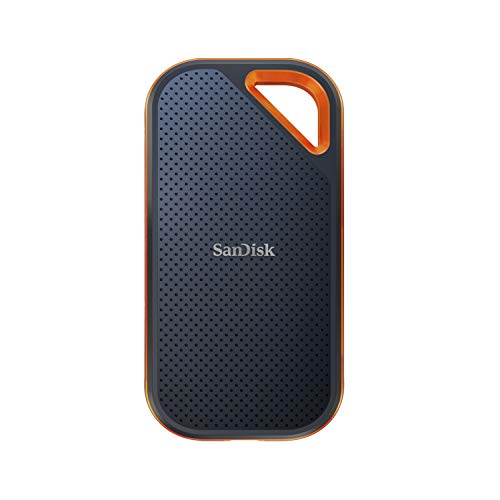
Sandisk
SanDisk Extreme PRO 1TB Portable SSD
Up to 2000 MB/s over USB 3.2 Gen 2x2 with an IP65 rating, which is the practical floor for a drive that gets thrown in a bag.
- Capacity
- 1 TB
- Speed
- Up to 2000 MB/s
The first offload drive to buy.
Check price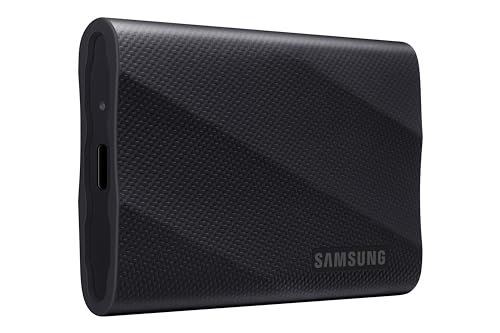
Samsung
Samsung T9 2TB Portable SSD
2 TB covers a RAW shoot day twice over, which is what a two-copy backup rule actually requires.
- Capacity
- 2 TB
Buy two and keep them apart.
Check price
OWC
OWC Envoy Ultra 2TB Thunderbolt 5
Thunderbolt speeds fast enough to edit RAW directly off the drive, which removes an entire copy step from the day.
- Interface
- Thunderbolt 5
Only worth it with a Thunderbolt machine.
Check priceThe rule that prevents the worst day of your career: never format a card until the footage exists in two separate places on two separate drives. A copy in a second folder on the same drive is not a backup. Use a tool that verifies with checksums rather than dragging folders in a file manager, because a silently truncated copy looks identical to a complete one until you open the last clip.
The media workflow guide covers the naming, verification and card rotation discipline that turns this from a good intention into a habit.
Worked example: a three day documentary shoot
Two cameras at 240 Mbps, four hours rolling per day, three days. That is 108 GB per hour per camera, so 216 GB per hour, 864 GB per day, and 2.6 TB of footage across the shoot. At two copies that is 5.2 TB of drive space, which is three 2 TB drives rather than the single drive most people pack.
Cards: 864 GB per day means two 512 GB cards per camera per day if you never reuse a card, or a nightly offload and reuse cycle with two cards per camera in rotation. The second approach is standard and requires the offload to be verified before the card goes back in the camera, which is why offload speed appears in the calculator.
Archive, briefly
Fast SSDs are working storage, not archive. Once a project is delivered, move the camera originals to cheaper, higher capacity storage and keep two copies of that as well. Spinning disks remain far cheaper per terabyte than flash, and for anything you intend to keep for a decade the format matters less than the discipline of periodically copying it forward onto new media.
Next, from here
- Bitrate and card speed calculator
Whether your card can keep up at all.
- Storage per hour chart
Every codec in one liftable table.
- Best SSDs for video
Offload drives and edit-from-drive options.
- Best CFexpress cards
Capacities, formats and sustained write.
- Media workflow and backup
Checksums, naming and card rotation.
- ProRes versus BRAW
The codec choice that decides your storage bill.
Common questions
- How many gigabytes does an hour of 4K footage take?
- It depends entirely on the codec, not the resolution. A 100 Mbps long-GOP file is about 45 GB per hour. A 240 Mbps intraframe file is about 108 GB per hour. ProRes 422 HQ at 4K 24p runs closer to 300 GB per hour, and 6K RAW can pass 400 GB per hour. Resolution alone tells you almost nothing.
- How much storage should I budget per shoot day?
- Take your codec rate in gigabytes per hour, multiply by the number of cameras, multiply by the hours actually rolling, then double it because you keep two copies. A single camera shooting 108 GB per hour with three hours of rolling produces 324 GB, which needs 648 GB of drive space to be stored safely.
- Is one big card better than several small ones?
- Several smaller cards are safer and one big card is faster to work with. A 1 TB card means fewer changes and fewer chances to misplace one, and it also means a single failure loses a whole day. The common compromise is two 512 GB cards, so no single failure costs more than half the material.
- What is the two-copy rule?
- Never format a card until the footage exists in two separate places, on two separate drives, ideally not in the same bag. A copy on the same drive as the original is not a backup, and a card still holding the footage counts as one of the two copies only until you need to shoot again. Verify with checksums rather than by eye.
- Do I need to keep the camera original files after editing?
- Keep the camera originals until the project is delivered and paid, at minimum. After that it becomes a business decision: originals allow a reedit or a regrade, and proxies plus the final master do not. Long-term archival on spinning disks or LTO is far cheaper per terabyte than keeping everything on fast SSDs.
- How fast does an offload drive need to be?
- Fast enough that offloading does not become the schedule. A 512 GB card at 200 MB/s takes about 43 minutes; at 800 MB/s it takes about 11. If you also want to edit directly from the drive, aim for 1,000 MB/s or better, and remember that a fast drive on a slow port runs at the speed of the port.
Totalling your own rig weight against your gimbal payload? The Camera Rig Build Planner is the paid version of these pages: 8 printable worksheets you fill in with your own numbers, plus the full PDF, $29.