Recording Bitrate and Card Speed Calculator
Short answer
Divide the bitrate in megabits per second by eight to get megabytes per second, then require a card whose sustained write specification is at least 1.5 times that figure. A 600 Mbps codec needs 75 MB/s of real throughput and a card rated for at least 113 MB/s sustained, not peak.
Dropped frames are almost always a card problem, and almost always a units problem underneath that. Codecs are quoted in megabits, cards in megabytes, and the factor of eight between them is where people go wrong. For most cinema bodies the Delkin 512GB CFexpress Type B 4.0 at around $280 is the sensible card, and the calculator below tells you whether it clears your bitrate with room to spare.
Calculator
Runs in your browser
Enter the bitrate your camera writes in its chosen mode, or use the presets, and the calculator gives the required throughput and the card class that covers it.
Required throughput
0 MB/s
0 Mbps
Card sustained write
0 MB/s
Minimum specification to look for
Per hour, all cameras
0 GB
0 GB for a 6 hour day
Card format that covers it
-
The two formulas
Throughput. Megabytes per second equals megabits per second divided by eight. A 240 Mbps codec writes 30 MB/s. A 880 Mbps RAW mode writes 110 MB/s.
Volume. Gigabytes per hour equals megabits per second multiplied by 3,600 seconds, divided by 8, divided by 1,000. A 240 Mbps codec consumes 108 GB per hour. That single number decides how many cards a shoot day needs, and it is worked through in more detail on the storage per hour calculator.
Card formats and what they really sustain
| Format | Typical sustained write | Covers up to |
|---|---|---|
| SD UHS-I, V30 | 30 MB/s minimum | Around 240 Mbps, with no headroom |
| SD UHS-II, V60 | 60 MB/s minimum | Around 400 Mbps |
| SD UHS-II, V90 | 90 MB/s minimum | Around 600 Mbps |
| CFexpress Type A | 400 to 1,650 MB/s | Everything a Sony body offers |
| CFexpress Type B 2.0 | 1,300 to 1,400 MB/s | All current camera modes |
| CFexpress Type B 4.0 | 2,800 to 3,500 MB/s | Everything, with offload speed as the real benefit |
| External SSD over USB-C | 800 to 2,000 MB/s | Most modes, if the camera supports SSD recording |
The V ratings are the useful part of the SD specification, because V30, V60 and V90 define a minimum sustained sequential write in MB/s. That is exactly the number a camera needs, unlike the large "up to" figure printed on the front of the card.
Why peak speed is the wrong number
A memory card has a fast write cache and slower underlying flash. A short burst lands in the cache and hits the headline number. A twenty minute take fills the cache, and from that point the card writes at the speed of the flash behind it, which can be a fraction of the peak. Cards also throttle as they warm, and a CFexpress card in a sealed camera body on a hot day gets warm quickly.
This is what the Video Performance Guarantee ratings address. A VPG400 card guarantees a minimum 400 MB/s sustained, which is a promise about the worst case rather than the best one. If your camera offers a mode you use constantly and it occasionally stutters, this is the specification to go shopping for.
Card choices by camera type
Three cards for three situations
A Type A card for Sony bodies that require it, a value Type B for most cinema cameras, and a sustained-write specified card for long RAW takes.

Lexar
Lexar 256GB CFexpress Type A Silver 4.0
More capacity per dollar than the first-party Type A cards, which makes the format tolerable rather than punitive.
- Capacity
- 256 GB
Check your camera's approved list first.
Check price
Delkin Devices
Delkin 512GB CFexpress Type B 4.0
512 GB of CFexpress 4.0 at the lowest sane price per gigabyte, which matters because RAW eats cards faster than any other format decision.
- Capacity
- 512 GB
- Spec
- CFexpress 4.0 Type B
The value card for most cine bodies.
Check price
Angelbird
Angelbird AV PRO SE CFexpress B v4 512GB
Specified for sustained rather than burst write, which is exactly the number that decides whether a long RAW take drops frames.
- Focus
- Sustained write
For long-take RAW recording.
Check priceThe Lexar 256GB CFexpress Type A Silver 4.0 exists because Sony's cine line requires Type A for its highest bitrate modes and the first party cards are punishing. The Delkin 512GB CFexpress Type B 4.0 is the sensible default for anything taking Type B. The Angelbird AV PRO SE CFexpress B v4 512GB is specified around sustained write rather than burst, which is the card to choose if you record forty minute takes.
Offload speed is the other half of the decision
Getting the data off the card
A slow reader turns a full 512 GB card into a lunch break. Match the reader to the card generation, and offload to a drive fast enough to also edit from.

ProGrade Digital
ProGrade CFexpress Type B Reader (USB4)
A fast reader is not optional with CFexpress: a slow one turns a 512 GB card into a lunch break.
- Interface
- USB4
Buy this with your first CFexpress card.
Check price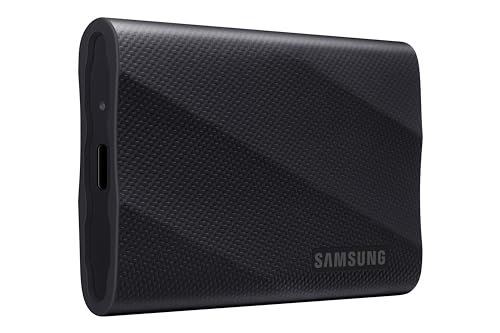
Samsung
Samsung T9 1TB Portable SSD
The same 2000 MB/s class in a smaller shell that holds speed better under a long sustained copy.
- Capacity
- 1 TB
The value pick for daily offloads.
Check price
OWC
OWC Envoy Ultra 2TB Thunderbolt 5
Thunderbolt speeds fast enough to edit RAW directly off the drive, which removes an entire copy step from the day.
- Interface
- Thunderbolt 5
Only worth it with a Thunderbolt machine.
Check priceA 512 GB card copied at 200 MB/s takes about 43 minutes. The same card through a ProGrade CFexpress Type B Reader (USB4) at USB4 speeds can complete in a fraction of that. On a multi-card day, reader speed is the difference between offloading over lunch and offloading after dinner.
That is also the argument for the OWC Envoy Ultra 2TB Thunderbolt 5 at the top end: if the destination drive is fast enough to edit directly from, the copy step and the ingest step become the same step. Read the media workflow guide for the discipline that goes around it.
Worked example: a two camera interview day
Two bodies recording 4K intraframe at 240 Mbps. Each writes 30 MB/s, so each needs a card rated for at least 45 MB/s sustained at the recommended 1.5x headroom. A V60 SD card clears that comfortably, and any CFexpress card clears it many times over.
Volume is the real constraint. 240 Mbps is 108 GB per hour per camera, so two cameras generate 216 GB per hour. A six hour shoot day with cameras rolling half the time is roughly 650 GB, which is two 512 GB cards or one plus careful management, and 1.3 TB of drive space once you keep two copies.
When to record externally instead
If your camera's internal codec is long-GOP only, an external recorder such as the Atomos Ninja 5.2-inch writes ProRes instead, which is easier to edit and holds up better in a grade. The cost is a bigger file: ProRes 422 HQ at 4K is substantially larger than a 100 Mbps internal file, so your storage number roughly triples. That trade is examined in the internal versus external recording comparison.
Next, from here
- Storage per hour calculator
How many cards and drives a day needs.
- Codec bitrate reference chart
Every common codec and its data rate.
- Card speed reference chart
Formats, sustained speeds and VPG ratings.
- Best CFexpress cards
Type A, Type B and what each camera needs.
- Codecs explained
Long-GOP, intraframe, ProRes and RAW.
- CFexpress versus SD UHS-II
When the cheaper card is genuinely enough.
Common questions
- How do I convert a bitrate in Mbps to a card speed in MB/s?
- Divide by eight. A bit is an eighth of a byte, so 800 Mbps is 100 MB/s. Card speeds are quoted in megabytes per second and codecs in megabits per second, which is the single most common unit mistake in this area. Then add headroom, because a card must sustain that rate continuously rather than hit it briefly.
- How much sustained write headroom should a card have?
- Aim for a sustained write specification at least 1.5 times your recording rate, and treat 2x as comfortable. Burst or peak figures on the packaging are not the number that matters. A long take is a sustained load, and a card that hits 1400 MB/s in a burst may settle far lower once its cache is full and it warms up.
- Why does my camera drop frames on a fast card?
- Usually because the peak speed is high and the sustained speed is not, or because the card is not on the approved list for that camera. Video Performance Guarantee ratings such as VPG400 exist precisely to specify a guaranteed minimum sustained write, which is a more useful number for video than any peak figure.
- Is CFexpress Type A worth the price premium?
- Only if your camera requires it. Type A is physically smaller and is used by Sony bodies that accept it in the same dual slots as SD. Per gigabyte it costs far more than Type B for lower speeds, so nobody chooses it on merit. If your camera takes Type B, use Type B, and if it takes both SD and Type A, use SD for lower bitrate modes.
- Does a higher bitrate always mean a better image?
- No. Bitrate matters only relative to the codec and the compression scheme. An intraframe codec at 400 Mbps and a long-GOP codec at 100 Mbps can look similar on static footage, and the intraframe file will hold up far better on motion and in a grade. Codec structure matters more than the number, which is why ProRes at a high bitrate edits so easily.
- What bitrate do I need for a client deliverable?
- Shoot high and deliver low. Recording at 200 to 400 Mbps in a 10-bit codec gives a file that survives grading and reframing, then a delivery export at 20 to 50 Mbps is plenty for streaming. Never shoot at delivery bitrate, because every generation of compression compounds and the artefacts show up in the grade rather than on the monitor.
Totalling your own rig weight against your gimbal payload? The Camera Rig Build Planner is the paid version of these pages: 8 printable worksheets you fill in with your own numbers, plus the full PDF, $29.