Codec Bitrate Chart: Every Common Video Codec and What It Costs
Short answer
Divide any bitrate in megabits per second by 8 to get the sustained card write speed in megabytes per second, and multiply by 450 to get gigabytes per hour. A 240 Mbps all-intra codec needs 30 MB/s sustained and consumes 108 GB per hour, so a 512 GB card holds about 4.7 hours.
Every codec decision is also a storage and card speed decision, and the arithmetic is simple enough to do in your head once you know the two conversions. The tables below give bitrate, storage per hour and required sustained write for every format you are likely to shoot, along with how long a Delkin 512GB CFexpress Type B 4.0 holds each one.
The two conversions worth memorising
Bitrate in megabits per second divided by 8 gives megabytes per second, which is the sustained write speed a card must hold. A 240 Mbps codec needs 30 MB/s sustained, which almost any modern card manages, and a 1,200 Mbps codec needs 150 MB/s, which no SD card sustains.
Bitrate in megabits per second multiplied by 450 gives gigabytes per hour, closely enough for planning. A 240 Mbps codec is about 108 GB per hour. That figure comes from dividing by 8 for bytes, then multiplying by 3,600 seconds and dividing by 1,000 twice for gigabytes.
Those two conversions answer nearly every practical media question. What card do I need, and how many hours does it hold. Everything else in this chart is those two calculations applied to specific formats.
The full codec table
| Codec and mode | Bitrate | Per hour | Sustained write needed | Hours on 512 GB |
|---|---|---|---|---|
| H.264 1080p long-GOP | 50 Mbps | 22 GB | 6 MB/s | 23.0 |
| H.264 4K long-GOP 8-bit | 100 Mbps | 45 GB | 13 MB/s | 11.4 |
| H.265 4K long-GOP 10-bit | 150 Mbps | 68 GB | 19 MB/s | 7.5 |
| All-intra 4K 10-bit | 240 Mbps | 108 GB | 30 MB/s | 4.7 |
| All-intra 4K 60p 10-bit | 400 Mbps | 180 GB | 50 MB/s | 2.8 |
| High bitrate all-intra 4K | 600 Mbps | 270 GB | 75 MB/s | 1.9 |
| ProRes 422 1080p | 147 Mbps | 66 GB | 18 MB/s | 7.8 |
| ProRes 422 HQ 1080p | 220 Mbps | 99 GB | 28 MB/s | 5.2 |
| ProRes 422 4K | 590 Mbps | 266 GB | 74 MB/s | 1.9 |
| ProRes 422 HQ 4K | 880 Mbps | 396 GB | 110 MB/s | 1.3 |
| BRAW 6K at 12:1 | 170 Mbps | 77 GB | 21 MB/s | 6.7 |
| BRAW 6K at 5:1 | 400 Mbps | 180 GB | 50 MB/s | 2.8 |
| BRAW 6K at 3:1 | 670 Mbps | 302 GB | 84 MB/s | 1.7 |
| ProRes RAW 4K | 1,000 Mbps | 450 GB | 125 MB/s | 1.1 |
| ProRes RAW HQ 4K | 1,700 Mbps | 765 GB | 213 MB/s | 0.7 |
| 8K RAW | 2,600 Mbps | 1,170 GB | 325 MB/s | 0.4 |
The pattern to take from this is where the jumps are. Long-GOP to all-intra roughly doubles storage. All-intra to ProRes doubles it again. ProRes to RAW doubles it once more. Each of those steps buys something real, and each of them costs you drives, offload time and archive space forever rather than once.
What card class each bitrate requires
| Sustained write needed | SD card class | CFexpress | Typical codecs |
|---|---|---|---|
| Up to 30 MB/s | V30 or better | Any | 4K long-GOP and 240 Mbps all-intra |
| 30 to 60 MB/s | V60 or better | Any | 4K 60p all-intra, BRAW 5:1 |
| 60 to 90 MB/s | V90 | Any | High bitrate all-intra, ProRes 422 4K |
| 90 to 150 MB/s | Beyond SD | Type A or B | ProRes 422 HQ 4K, ProRes RAW |
| 150 to 300 MB/s | Beyond SD | Type B preferred | ProRes RAW HQ, high frame rate RAW |
| Above 300 MB/s | Beyond SD | Type B | 8K RAW and above |
A V90 SD card guarantees 90 MB/s minimum sustained write, and that covers everything up to about 700 Mbps. That is a large fraction of what most people actually shoot, which is why starting on fast SD in a dual-format camera and adding CFexpress later is a genuinely sensible way to spread the cost.
Media at these speeds
$194 to $280. Type B for most cameras, Type A for Sony cine bodies, and an SSD for recorders and offload.

Delkin Devices
Delkin 512GB CFexpress Type B 4.0
512 GB of CFexpress 4.0 at the lowest sane price per gigabyte, which matters because RAW eats cards faster than any other format decision.
- Capacity
- 512 GB
- Spec
- CFexpress 4.0 Type B
The value card for most cine bodies.
Check price
Lexar
Lexar 256GB CFexpress Type A Silver 4.0
More capacity per dollar than the first-party Type A cards, which makes the format tolerable rather than punitive.
- Capacity
- 256 GB
Check your camera's approved list first.
Check price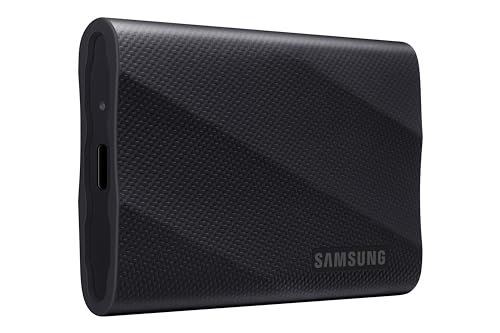
Samsung
Samsung T9 1TB Portable SSD
The same 2000 MB/s class in a smaller shell that holds speed better under a long sustained copy.
- Capacity
- 1 TB
The value pick for daily offloads.
Check priceWhy bitrate is not image quality
Two codecs at the same bitrate can look very different, because compression efficiency varies enormously. H.265 achieves roughly the same quality as H.264 at about half the bitrate, and both are long-GOP formats that describe most frames as differences from neighbours. That efficiency is why a 150 Mbps H.265 file can match a 300 Mbps H.264 one.
All-intra codecs use more bits for the same visual quality by design, because every frame is stored complete rather than as a difference. The bits are not buying a better picture, they are buying a file that scrubs instantly and does not degrade on complex or noisy footage.
RAW formats break the comparison entirely, because they store sensor data rather than an image. Comparing a RAW bitrate with a ProRes bitrate is comparing two different kinds of file, and the RAW one gives you editable white balance that no amount of ProRes bitrate provides.
Where bitrate actually matters
- Complex scenes. Rain, foliage, confetti, water and heavy grain all defeat a low-bitrate long-GOP codec, which runs out of bits to describe how much changed between frames.
- Green screen. Compression artefacts around a subject edge make a key hard to pull cleanly, and bitrate plus chroma subsampling both matter here.
- Heavy grading. Pushing colour hard exposes compression blocking that was invisible on the original.
- Fast motion at high frame rates. More frames per second means the same bitrate is spread thinner across each one.
- Long takes. A codec that degrades gracefully at the start can visibly fall apart on a twenty minute continuous shot.
- Nothing else. On a well lit, moderately detailed scene delivered without a heavy grade, a good 100 Mbps file and a 400 Mbps file are hard to tell apart.
That last point is the honest one. Bitrate matters at the margins and in specific circumstances, and most footage never encounters those circumstances. Choosing a codec is often more about editing performance and storage cost than about a visible difference on screen.
Planning a shoot day
Estimate hours of recording rather than hours on location. A documentary day with eight hours on location typically produces two to four hours of recorded material; a multi-camera event with cameras running continuously can produce twenty across three cameras.
Multiply by the per hour figure from the table, then double it, because the backup discipline requires two copies on separate drives before any card is reused. A four hour day at 240 Mbps is 432 GB recorded and 864 GB of drive space consumed.
Then check the card side separately. Four hours at 240 Mbps needs 432 GB of card capacity across however many cards you carry, and two 512 GB cards covers it comfortably with the loss of one card costing part of a day rather than all of it.
Next, from here
- Bitrate and card speed calculator
Your mode, converted automatically.
- Storage per hour calculator
Cards and drives for your own day.
- Codecs explained
What long-GOP, all-intra and RAW mean.
- Storage per hour chart
The same data organised by capacity.
- Best CFexpress cards
The cards that hold these rates.
- ProRes versus BRAW
Two formats with very different costs.
Common questions
- How do I convert bitrate to storage per hour?
- Multiply the bitrate in megabits per second by 450 to get gigabytes per hour, closely enough for planning. A 240 Mbps codec is about 108 GB per hour. The exact derivation is dividing by 8 for bytes, multiplying by 3,600 seconds, then dividing by 1,000 twice for gigabytes, which works out to a factor of 0.45 per Mbps.
- What sustained write speed does my codec need?
- Divide the bitrate in megabits per second by 8. A 240 Mbps codec needs 30 MB/s sustained, a 600 Mbps codec needs 75 MB/s, and a 1,700 Mbps ProRes RAW HQ stream needs 213 MB/s. Add real headroom rather than buying a card rated exactly at the requirement, because sustained rates drop when a card gets hot.
- How much storage does 4K ProRes use?
- ProRes 422 at 4K runs about 590 Mbps, which is 266 GB per hour. ProRes 422 HQ at 4K runs about 880 Mbps, which is 396 GB per hour, so a 1 TB drive holds around two and a half hours. That is roughly four times what a 240 Mbps camera codec consumes, and it is the real ongoing cost of an external recorder.
- Is a higher bitrate always better quality?
- No. H.265 achieves roughly the same quality as H.264 at about half the bitrate, so bitrate is only comparable within the same codec family. All-intra formats use more bits for the same visual quality by design, buying editing performance rather than a better picture. RAW formats store sensor data and cannot be compared on bitrate at all.
- When does bitrate actually make a visible difference?
- On complex scenes like rain, foliage or heavy grain that defeat a long-GOP codec, on green screen work where compression artefacts make a key hard to pull, under heavy grading that exposes blocking, and on high frame rates where the same bitrate is spread across more frames. On a well lit moderate scene delivered without a heavy grade, the difference is small.
- How much card capacity does a shoot day need?
- Estimate recorded hours rather than hours on location, since a documentary day usually produces two to four hours of material. Multiply by the per hour figure for your codec, then plan drive space at double that because two copies on separate drives are required before any card is reused. Two 512 GB cards covers most single-camera days.
Totalling your own rig weight against your gimbal payload? The Camera Rig Build Planner is the paid version of these pages: 8 printable worksheets you fill in with your own numbers, plus the full PDF, $29.