Video Codecs Explained: Bitrate, Bit Depth and Chroma Subsampling
Short answer
Three specifications decide how a video file behaves: compression structure, bit depth and chroma subsampling. All-intra codecs store every frame complete and scrub instantly; long-GOP codecs reconstruct frames from neighbours and are harder to edit. Ten-bit gives 1,024 levels per channel against 8-bit's 256, which is why 10-bit survives grading and 8-bit bands.
Codec specifications sound like jargon and each one maps to something you will feel in the edit. Long-GOP versus all-intra decides whether footage scrubs. Bit depth decides whether a gradient bands when you grade it. Chroma subsampling decides whether a key pulls cleanly. And all three decide how many 512 GB cards a shoot day needs, which is the cost that keeps arriving after the camera is paid for.
Long-GOP and all-intra
A long-GOP codec stores occasional complete frames and describes the frames between them as differences from their neighbours. This is extremely efficient, because most of a frame is usually similar to the one before it, and it is how a 100 Mbps file can look as good as a 400 Mbps one on simple footage.
The cost is that no in-between frame exists as an independent picture. To display frame 37, the software must decode a complete frame and then apply every difference up to that point. That is why scrubbing long-GOP footage is sluggish, why it strains a processor, and why complex or noisy scenes fall apart: the codec runs out of bits to describe how much changed.
An all-intra codec stores every frame complete, like a sequence of stills. Files are several times larger and everything about editing is faster, because any frame can be decoded on its own. On a set where the edit starts the same day, that difference is the whole argument.
Bit depth, and where banding comes from
Bit depth is how many distinct values each colour channel can take. Eight bit gives 256 levels per channel, ten bit gives 1,024, and twelve bit gives 4,096. That sounds like more than enough in every case, and it is, until you grade.
Grading stretches parts of the tonal range. Lifting shadows takes a narrow band of values and spreads it across a wider range, so gaps appear between the levels that were recorded. In 8-bit those gaps become visible steps, which is banding, and it shows up first in gradients like a sky or a wall lit unevenly. In 10-bit there are four times as many levels, so the same stretch usually stays smooth.
This matters most on log footage, because log deliberately compresses a wide dynamic range into the available levels and the grade then expands it again. Eight bit log is the worst combination available and should be avoided: if your camera only offers 8-bit, a standard profile is often the better choice.
Chroma subsampling, in plain terms
| Notation | What is stored | Where it matters |
|---|---|---|
| 4:4:4 | Full colour detail for every pixel | Visual effects, compositing, high end delivery |
| 4:2:2 | Colour at half horizontal resolution | Keying, heavy grading, professional delivery |
| 4:2:0 | Colour at half horizontal and vertical resolution | Almost all consumer capture and delivery |
The reason 4:2:0 works at all is that human vision resolves brightness far better than colour, so throwing away three quarters of the colour information is nearly invisible on normal footage. It becomes visible when you pull a key, because the edge of a green screen subject is defined by colour, and it becomes visible when you push saturation hard in a grade. For ordinary work, 4:2:0 10-bit is a better use of bitrate than 4:2:2 8-bit.
RAW, and what it actually is
A RAW file stores the sensor data before debayering and before a colour profile is applied. White balance and ISO become adjustable in the edit rather than baked in, which is a genuinely different capability from a very good compressed file.
BRAW and ProRes RAW both compress that sensor data, so they are not uncompressed in the strict sense, and both remain far more flexible than any conventional codec. BRAW is recorded internally on Blackmagic bodies, which is why a Blackmagic Pocket Cinema Camera 6K G2 gives a RAW workflow with no external recorder, and ProRes RAW usually requires a device like the Atomos Ninja RAW.
The costs are real: larger files, a more demanding pipeline, and files that will not simply play for a client. RAW is worth it when grading is a substantial part of the work and unnecessary when it is not. Shooting RAW and then applying a standard look is spending storage on flexibility you did not use.
What a codec choice actually costs
The card that holds the day, the drive it offloads to, and the reader that makes the transfer bearable.

Delkin Devices
Delkin 512GB CFexpress Type B 4.0
512 GB of CFexpress 4.0 at the lowest sane price per gigabyte, which matters because RAW eats cards faster than any other format decision.
- Capacity
- 512 GB
- Spec
- CFexpress 4.0 Type B
The value card for most cine bodies.
Check price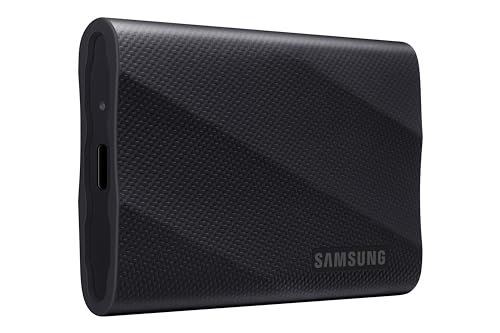
Samsung
Samsung T9 1TB Portable SSD
The same 2000 MB/s class in a smaller shell that holds speed better under a long sustained copy.
- Capacity
- 1 TB
The value pick for daily offloads.
Check price
ProGrade Digital
ProGrade CFexpress Type B Reader (USB4)
A fast reader is not optional with CFexpress: a slow one turns a 512 GB card into a lunch break.
- Interface
- USB4
Buy this with your first CFexpress card.
Check priceBitrate and storage, with real numbers
| Codec | Typical bitrate | Per hour | Hours on 512 GB |
|---|---|---|---|
| H.264 long-GOP 4K 8-bit | 100 Mbps | 45 GB | 11.4 |
| H.265 long-GOP 4K 10-bit | 150 Mbps | 68 GB | 7.5 |
| All-intra 4K 10-bit | 240 Mbps | 108 GB | 4.7 |
| High bitrate all-intra 4K | 600 Mbps | 270 GB | 1.9 |
| ProRes 422 HQ 4K | 880 Mbps | 396 GB | 1.3 |
| BRAW 6K at 5:1 | 400 Mbps | 180 GB | 2.8 |
| ProRes RAW HQ 4K | 1,700 Mbps | 765 GB | 0.7 |
The jump from long-GOP to all-intra roughly doubles your storage. The jump to ProRes or RAW multiplies it again. That cost is ongoing rather than one-off, because it lands on every card, every drive and every archive, and it is the part of a codec decision people account for least.
Choosing a codec for a job
- Delivering fast, simple grade, long recordings: long-GOP 10-bit. Efficient, and the grade will not stress it.
- Normal client work with a proper grade: all-intra 10-bit 4:2:2 if the camera has it, otherwise 10-bit 4:2:0.
- Green screen or compositing: 4:2:2 minimum, 10-bit, and all-intra so every frame is independent.
- Narrative with a real grade: RAW if the camera writes it internally, all-intra if not.
- Multi-camera events with hours of runtime: long-GOP, because storage and offload time dominate everything else.
- Anything where the camera only offers 8-bit: a standard profile rather than log, since 8-bit log grades badly.
That last one is the counterintuitive rule that saves the most footage. Log exists to preserve dynamic range for grading, and 8-bit does not have the levels to survive the grade that log requires. An 8-bit standard profile that looks close to finished in camera is a better starting point than 8-bit log.
Next, from here
- Bitrate and card speed calculator
What your chosen codec demands of a card.
- Storage per hour calculator
What it costs across a shoot day.
- ProRes versus BRAW
Two RAW-adjacent workflows compared.
- Codec bitrate chart
Every common codec in one citable table.
- Best monitor recorders
How to get a better codec than the camera offers.
- Best CFexpress cards
Where the bitrate bill actually lands.
Common questions
- What is the difference between long-GOP and all-intra?
- A long-GOP codec stores occasional complete frames and describes the rest as differences from neighbours, which is efficient but means no in-between frame exists independently. That is why long-GOP scrubs slowly and struggles with complex or noisy scenes. An all-intra codec stores every frame complete, so files are several times larger and every editing operation is faster.
- Is 10-bit really better than 8-bit?
- For grading, substantially. Eight bit gives 256 levels per channel and 10-bit gives 1,024. Grading stretches parts of the tonal range, and in 8-bit that stretch opens visible gaps between levels, which appear as banding in gradients like skies. Ten bit has four times as many levels, so the same stretch stays smooth. It matters most on log footage, which is designed to be stretched.
- What does 4:2:2 mean?
- It describes how much colour information is stored relative to brightness. Four by two by two keeps colour at half horizontal resolution; 4:2:0 halves it vertically as well; 4:4:4 keeps it all. Human vision resolves brightness far better than colour, so 4:2:0 is nearly invisible on normal footage and becomes obvious when pulling a green screen key or pushing saturation hard.
- Do I need to shoot RAW?
- Only when grading is a substantial part of the work. RAW stores sensor data before debayering, so white balance and ISO become editable decisions rather than baked-in ones. The costs are larger files, a more demanding pipeline and files that will not simply play for a client. Shooting RAW and then applying a standard look is spending storage on flexibility you never used.
- Should I shoot log on an 8-bit camera?
- Usually not. Log compresses a wide dynamic range into the available levels expecting the grade to expand it again, and 8-bit does not have enough levels to survive that expansion without banding. On an 8-bit body a standard picture profile that looks close to finished in camera is a better starting point, even though it gives up some highlight and shadow latitude.
- How much storage does a codec choice cost me?
- Moving from long-GOP to all-intra roughly doubles it, and moving to ProRes or RAW multiplies it again. A 150 Mbps long-GOP file is 68 GB per hour; ProRes 422 HQ at 4K is 396 GB per hour. That cost is ongoing rather than one-off, because it lands on every card, every offload drive and every archive for the life of the project.
Totalling your own rig weight against your gimbal payload? The Camera Rig Build Planner is the paid version of these pages: 8 printable worksheets you fill in with your own numbers, plus the full PDF, $29.