Media Workflow and Backup: The Routine That Saves Projects
Short answer
Offload every card to two separate drives before any card is reused, verify the copies with checksums rather than file counts, and never format a card in the field to make room. Cards left full until delivery act as a free third copy, and the moment you format one is the moment a shoot day exists in exactly one place.
Every story about lost footage contains the same moment: somebody formatted a card in the field to keep shooting. The routine that prevents it is not complicated and it is not optional. Two copies on two separate drives like the Samsung T9 1TB Portable SSD, verified, before any card is reused, with the cards themselves left full until delivery as a free third copy.
The rules, in order of importance
- Never format a card in the field to make room. Buy another card instead, because that moment is when a day exists in one place.
- Two copies on two separate physical drives before any card is reused. Two copies on one drive is one copy.
- Verify the copies, ideally with checksums, rather than trusting that the file count matched.
- Leave the cards full until the project is delivered. They cost nothing to leave alone and they are your third copy.
- Label everything physically. Identical black drives with no labels is how footage gets overwritten.
- Move anything worth keeping onto a different storage medium before the SSDs get reused for the next project.
That first rule is the only one that is genuinely non-negotiable. Every other item on the list improves your odds; formatting in the field creates the single-point-of-failure that the rest of the list exists to prevent.
Card handling on the day
Use a physical system that shows at a glance which cards are shot and which are empty. The common one is a card wallet where full cards go in label-down and empty cards go label-up, so a glance tells you the state without reading anything. It costs nothing and it survives fatigue at the end of a long day.
Format cards in the camera that will use them, at the start of the day, not in a computer and not in a different body. In-camera formatting writes the file structure the camera expects and clears any partial files from a previous session.
Do not fill a card to the last gigabyte. Leaving headroom means a take that runs long does not stop unexpectedly, and it avoids the fragmented tail of a nearly full card, which is where write performance is worst on some formats.
The offload, step by step
Use a fast reader. A ProGrade CFexpress Type B Reader (USB4) at around $105 over USB4 clears a 512 GB card in a few minutes while a cheap USB 3.0 reader can take half an hour for the same card. Across a day with several cards that difference is most of an evening, and an offload that is quick is an offload that actually gets done.
Copy to drive one, then copy to drive two, ideally with software that verifies both. Checksum verification reads back what was written and compares it against the source, which catches the silent corruption that a file count check does not. Free and paid tools exist for this on every platform and any of them is better than dragging folders.
Only when both copies are verified does the card go back in the wallet as available. Not before. The discipline is in the ordering, not in the tools.
The offload kit
Two drives and a fast reader. The second drive is not optional, and it should be a different physical device rather than a second folder.
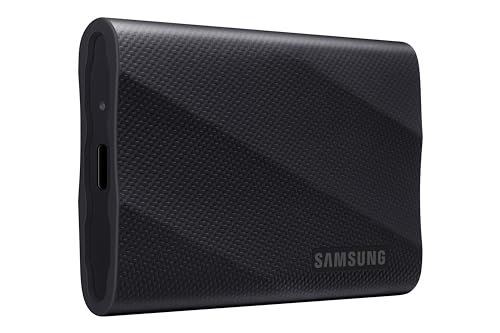
Samsung
Samsung T9 1TB Portable SSD
The same 2000 MB/s class in a smaller shell that holds speed better under a long sustained copy.
- Capacity
- 1 TB
The value pick for daily offloads.
Check price
ProGrade Digital
ProGrade CFexpress Type B Reader (USB4)
A fast reader is not optional with CFexpress: a slow one turns a 512 GB card into a lunch break.
- Interface
- USB4
Buy this with your first CFexpress card.
Check price Samsung
Samsung T9 2TB Portable SSD
2 TB covers a RAW shoot day twice over, which is what a two-copy backup rule actually requires.
- Capacity
- 2 TB
Buy two and keep them apart.
Check priceNaming and folder structure
| Level | Example | Why |
|---|---|---|
| Project | PROJ_ClientName | One top level folder per project, always |
| Shoot day | D01_2026-08-17 | ISO dates sort correctly, unlike written ones |
| Source | A_CAM, B_CAM, AUDIO | Separated by device, not by content |
| Card | A001, A002 | One folder per card, never merged |
| Original files | Untouched camera names | Never rename originals. Rename copies |
The card-level folder is the one people skip and then need. Camera file naming restarts or repeats across cards, so merging two cards into one folder produces filename collisions that either overwrite files or force renaming, and both destroy the link back to the original media. One folder per card, always.
Working drives versus archive
An SSD is a working drive. Flash memory stores data as trapped charge, and that charge leaks slowly when the drive is unpowered, so an SSD left in a drawer for five years is not a reliable archive. This is not a common failure and it is a real one, and it is not what SSDs are designed for.
For anything worth keeping, use spinning disks, cloud storage, or both. Spinning disks are cheap per terabyte and can be stored powered down for years, though they should be spun up periodically. Cloud storage removes the physical risk entirely and costs an ongoing fee, which for a working professional is a business expense rather than a luxury.
The practical version for a small operation: two SSDs during production, then a copy onto a large spinning disk and a copy into cloud storage at delivery, then the SSDs get reused. That gives you three copies at rest on two different technologies, which is enough for almost any risk.
What to keep and what to discard
Keep every original camera file until delivery plus a defined period afterwards, because clients ask for changes and reshooting is expensive. Once that period passes, the decision becomes a storage cost calculation rather than a safety one.
The thing genuinely worth keeping forever is the finished delivery plus the project file and any custom assets, which together are a fraction of the size of the source media. Being able to re-export a finished piece in a new format years later is worth far more than being able to re-grade it.
Discarding source media is a real option and people are unreasonably reluctant to do it. A documentary shoot generating a terabyte a day accumulates faster than any sensible archive budget, and keeping everything forever means eventually keeping it badly. Decide what matters and store that properly.
Syncing separate audio
If you record dual-system sound, the audio files are part of this workflow and not a separate one. They go on the same two drives, in the same project folder, at the same time. Separating them is how audio and picture get archived to different places and one of them gets lost.
Sync before you begin cutting rather than while you cut, so a sync error is discovered and fixed once instead of appearing fifty times across a timeline. If you used timecode, this is automatic. If you did not, the software matches the camera scratch track against the good recording.
Record thirty seconds of room tone in every location and keep it with that location's files. It is what an editor uses to patch gaps and smooth cuts, and it is the most commonly skipped item in location sound.
Next, from here
- Best SSDs for video
The drives this routine runs on.
- Best CFexpress cards
Sizing cards to a shoot day.
- Storage per hour calculator
How much drive a day actually needs.
- Codecs explained
Where the storage bill comes from.
- Timecode and sync guide
Making dual-system audio painless.
- Storage per hour chart
Every common codec in one table.
Common questions
- How many copies of my footage should I keep?
- Two on separate physical drives before any card is reused, with the original cards left full until delivery as a free third copy. Two copies on the same drive is one copy, because a drive failure takes both. At delivery, move a copy onto a different storage technology such as a spinning disk or cloud storage, so the archive does not depend on flash memory holding charge.
- Why should I never format a card in the field?
- Because that is the exact moment a shoot day exists in only one place, on a drive that has not been verified. Every story about lost footage contains this decision. Another card costs a fraction of what reshooting anything costs, and card capacity is the cheapest insurance in a camera kit. Buy a spare card rather than making room.
- How should I verify an offload?
- With checksum verification, which reads back what was written and compares it against the source. A matching file count proves only that the same number of files exist, not that their contents are intact, and silent corruption during a copy is exactly the failure that produces a file which will not open two weeks later. Free tools do this on every platform.
- How should I organise footage folders?
- Project, then shoot day with an ISO date so folders sort correctly, then source device, then one folder per card, with original camera filenames untouched. The card-level folder is the one people skip: camera file naming repeats across cards, so merging two cards into one folder causes collisions that either overwrite files or force renaming that breaks the link to the original media.
- Can I archive video on SSDs?
- Not reliably. Flash memory holds data as trapped charge which leaks slowly when unpowered, so an SSD in a drawer for five years is a working drive being used as an archive. Use spinning disks, which are cheap per terabyte and can sit powered down for years, or cloud storage, or both. Keep SSDs for production and offload where their speed is the point.
- Should I keep all my source footage forever?
- Keep originals until delivery plus a defined period, because clients ask for changes and reshooting is expensive. After that it becomes a cost decision rather than a safety one. What is genuinely worth keeping permanently is the finished delivery plus the project file and custom assets, which are a fraction of the size and let you re-export in a new format years later.
Totalling your own rig weight against your gimbal payload? The Camera Rig Build Planner is the paid version of these pages: 8 printable worksheets you fill in with your own numbers, plus the full PDF, $29.