Best Wireless Microphone Systems for Video in 2026
Short answer
The best wireless microphone system for most video work is the Rode Wireless PRO at around $249, because it records a backup track internally on each transmitter, so a dropout or a level mistake does not cost you the interview. If the budget is tighter, the DJI Mic 2 at $199 does the same internal recording trick and is easier to operate.
A radio microphone puts the capsule on the person instead of near them, which is the single largest improvement available to documentary sound. The Rode Wireless PRO at around $249 is the pick because each transmitter records its own backup internally, so the recording survives a dropout. The DJI Mic 2 (2 TX, 1 RX, Case) at $199 does the same and is simpler to hand to a nervous subject, and the Rode Wireless GO III at $168 is the budget entry.
Why proximity beats everything else
The ratio of direct sound to reflected sound is what makes dialogue sound close or distant, and it is governed by distance. A capsule six inches from a mouth is overwhelmingly direct sound. The same capsule three metres away in the same room captures a large proportion of reflections, and no processing recovers the difference.
That is the whole argument for a radio microphone. It is not about convenience, it is about acoustics. A cheap lavalier six inches from a mouth routinely sounds better than an expensive shotgun three metres away, and understanding that saves people from upgrading the wrong end of their sound kit.
It also removes the boom operator from the equation, which is why documentary work leans on radio microphones and narrative work leans on boom. Documentary cannot always afford a second person, and radio is what makes solo sound viable.
Where most buyers should look
$168 to $249. All three record an internal backup, which is the feature that actually prevents lost interviews.

Rode
Rode Wireless GO III
Two transmitters with 32-bit float onboard recording, so a dropout in the radio link does not lose the take.
- Channels
- 2 TX
- Backup
- 32-bit float onboard
The cheapest wireless worth owning.
Check price
DJI
DJI Mic 2 (2 TX, 1 RX, Case)
Two transmitters with internal recording and a charging case, and the case is what actually keeps a two-person kit charged and findable.
- Channels
- 2 TX
- Case
- Charging
The value pick for interviews.
Check price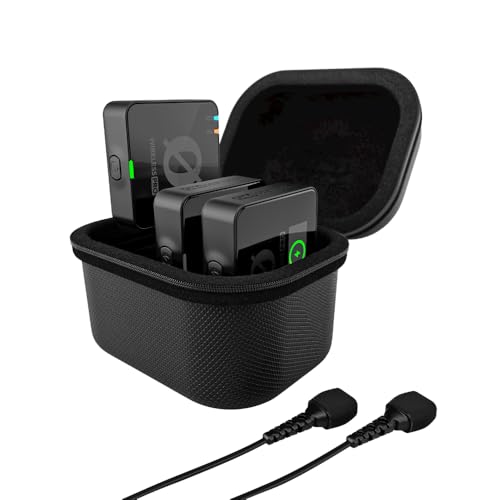
Rode
Rode Wireless PRO
Adds timecode to the same two-transmitter format, which is the cheapest path to synced multicam without a separate timecode box per camera.
- Timecode
- Yes
- Recording
- 32-bit float
The pick if you shoot multicam.
Check priceInternal recording, and why it changes the category
Older radio microphone systems transmitted and nothing else, so a dropout was simply a hole in the audio. Modern systems record a copy inside the transmitter itself, on the person, where the radio link cannot affect it. If the link drops, the backup file has clean audio for that moment.
That single feature turned radio microphones from a risk into a reliable primary. It means a system can be handed to a subject who then walks behind a wall, and the interview survives. On any shoot where you cannot ask for a second take, this is the specification to buy on.
Thirty two bit float is the second half of the same insurance. A 32-bit float recording holds an enormous dynamic range, so a level set far too low or too high can be corrected afterward with no audible penalty. Between internal recording and 32-bit float, the two most common ways to lose location sound are effectively closed off.
What the specifications mean in practice
| Specification | What it means | What matters |
|---|---|---|
| Internal recording | The transmitter records its own copy | The single most valuable feature. Insist on it |
| 32-bit float | Effectively no gain staging needed | Removes the second common way audio is lost |
| Quoted range | Line of sight in a quiet band | Assume a third of it indoors |
| Number of transmitters | How many people can be miked at once | Two covers an interview. Three covers a panel |
| Safety channel | A second track recorded some decibels lower | Useful, and superseded by 32-bit float |
| Onboard capsule | The transmitter itself is a microphone | Convenient, worse than a lavalier on a shirt |
| Lavalier input | A 3.5mm jack for a proper lavalier | Necessary for hidden or professional use |
The onboard capsule row is worth expanding. Clipping the transmitter itself to a collar is fast and works, but it puts a relatively large object visibly on the subject and puts the capsule further from the mouth than a discreet lavalier on the chest. For talking heads it is fine. For anything where the microphone should not be visible, you need the lavalier input.
Placement, which decides how it sounds
- Position the capsule about a hand span below the chin, on the sternum, pointing up toward the mouth.
- Keep it clear of anything that will rub against it: collars, necklaces, jacket lapels and hair.
- Loop the cable and tape the loop so a tug on the cable pulls on tape rather than on the capsule.
- Run the cable inside clothing where possible, so movement noise is damped by fabric rather than transmitted along a hanging wire.
- Check for clothing rustle by asking the subject to turn their head and shrug before you roll, not after.
- Keep the transmitter away from a phone in the same pocket, since a phone hunting for signal produces the classic buzzing interference.
That last one is responsible for a large share of ruined radio microphone recordings. Ask the subject to put their phone somewhere else, or at least into airplane mode. It takes five seconds and it removes an entire class of interference that cannot be fixed afterwards.
Range, congestion and what actually goes wrong
The quoted range on these systems is line of sight in clear spectrum, and reality is different. Bodies absorb, walls reflect, and a venue full of phones and access points crowds the band. Assume roughly a third of the quoted figure indoors, which is still ample for an interview and is the honest basis for planning.
What actually goes wrong is rarely distance. It is a subject who turns so their body is between the transmitter and the receiver, a transmitter in a pocket next to a phone, or a receiver mounted low behind the camera body. Mount the receiver high and clear, on a cold shoe or a SmallRig 9.8-inch Magic Arm, with the antenna vertical.
And because you cannot control spectrum at a venue, keep a second independent recording. On a documentary rig that is usually the camera-mounted shotgun. On a narrative set it is the boom. The point is that two microphones, recorded separately, are what makes the day recoverable.
The professional option and the safety net
A licence-free professional system, a 32-bit float recorder, and the camera shotgun that acts as the second independent source.

Sennheiser
Sennheiser AVX ME2 Lavalier Set
A digital UHF system that self-manages frequencies and takes phantom power straight from an XLR input, which is why it survives crowded RF environments.
- Band
- Digital 1.9 GHz
- Output
- XLR plug-on
For event and broadcast work.
Check price
Zoom
Zoom F3
Two channels of 32-bit float with no gain to set, which removes the single most common way a solo shooter ruins location audio.
- Channels
- 2
- Format
- 32-bit float
The pick for a one-boom documentary rig.
Check price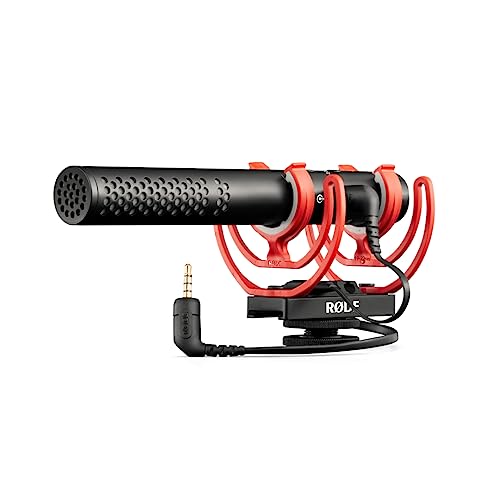
Rode
Rode VideoMic NTG
A shotgun that works on a camera 3.5mm input, over USB, or into a recorder, with a safety channel and a headphone out, which covers every way a solo shooter records sound.
- Power
- USB rechargeable
- Outputs
- 3.5 mm and USB
The single most useful first mic.
Check priceHow we chose
These picks come from published range and recording specifications, stated battery life, connector and input support, and verified owner reviews describing behaviour in congested environments and on real subjects. We did not have every one of these systems in our hands and will not claim otherwise.
The criteria in order: does the transmitter record its own backup, does it support 32-bit float, how it behaves when the link degrades, battery life across a shoot day, and whether a proper lavalier can be attached. Quoted range mattered least, because it is rarely the actual failure.
Next, from here
- Best shotgun microphones
The second independent source.
- Best field recorders
Where multi-channel sound gets recorded properly.
- Audio for video guide
Levels, placement and the two-source rule.
- Run and gun working build
Where radio microphones become standard.
- Timecode generators
Syncing dual-system sound automatically.
- Run and gun workflow
How a solo sound plan actually runs.
Common questions
- Why does a lavalier sound better than a shotgun?
- Because it is closer. The ratio of direct sound to room reflection is governed by distance, so a capsule six inches from a mouth captures overwhelmingly direct sound while a shotgun three metres away captures a large share of reflections. No pattern and no processing recovers that difference, which is why a cheap lavalier close in often beats an expensive shotgun far away.
- What does internal recording on a wireless transmitter do?
- It records a clean copy of the audio inside the transmitter, on the person, where a radio dropout cannot affect it. If the link drops out for two seconds when the subject walks behind a wall, the backup file still has those two seconds. On any shoot where you cannot ask for a second take, this is the feature worth buying on, ahead of range.
- What is 32-bit float recording and why does it matter?
- It is a recording format with such wide dynamic range that gain no longer has to be set correctly on location. A level far too low can be raised afterwards with no audible noise penalty, and a level far too high does not clip. Combined with internal recording, it closes off the two most common ways location sound is lost: a dropout and a wrong level.
- How far do wireless microphones actually reach?
- Assume about a third of the quoted figure indoors. Quoted ranges are line of sight in clear spectrum, and bodies absorb the signal while walls reflect it. In practice distance is rarely the failure: the usual causes are the subject turning so their body blocks the path, a transmitter next to a phone, or a receiver mounted low behind the camera body.
- Where should I clip a lavalier microphone?
- About a hand span below the chin, on the sternum, pointing up toward the mouth, clear of collars, necklaces and hair. Loop and tape the cable so a tug pulls on tape rather than on the capsule, and run the cable inside clothing so movement noise is damped by fabric. Check by asking the subject to turn their head and shrug before rolling, not after.
- Do I still need a shotgun if I have wireless microphones?
- Yes, as the second independent recording. Radio microphones share congested spectrum you do not control, so the discipline that makes a day recoverable is two microphones recorded separately. On a documentary rig the camera-mounted shotgun is that safety net. It also captures room tone and ambient sound that a chest-mounted lavalier never will.
Totalling your own rig weight against your gimbal payload? The Camera Rig Build Planner is the paid version of these pages: 8 printable worksheets you fill in with your own numbers, plus the full PDF, $29.