Run and Gun Workflow: How a Solo Documentary Rig Is Actually Operated
Short answer
A run and gun rig is operated by making decisions in advance so almost nothing has to be decided on location. Set the picture profile, frame rate, shutter and audio routing before you leave, run autofocus deliberately, keep a variable ND on the lens, and carry two independent audio sources so a lost radio link does not cost the interview.
Run and gun work is defined by one constraint: the subject decides what happens next and there is no second take. Everything in the workflow follows from that. Decisions get made before you leave, the rig stays configured, and the tools are chosen because they fail gracefully. A DJI Mic 2 (2 TX, 1 RX, Case) on the subject and a K&F Concept 82mm Variable ND, 1 to 5 Stops on the lens are the two that matter most.
Decide everything before you leave
The single largest difference between a smooth documentary day and a chaotic one is how many decisions were made in advance. Frame rate, picture profile, shutter, codec, audio routing, card formatting and battery state should all be settled at home, on a table, with time.
Write the settings down or photograph the menu screens once. Cameras get reset, firmware updates change defaults, and rediscovering your own configuration in a hallway while somebody waits is a bad use of the only take you get.
The corollary is to change as little as possible on location. A picture profile changed mid-day produces footage that will not cut with the morning. A frame rate changed to grab a slow motion shot and not changed back is a very common and very annoying discovery in the edit.
What stays configured on the rig
- The variable ND stays on the lens, all day, adjusted rather than removed.
- The monitor stays mounted with false colour available on a physical button.
- The radio microphone receiver stays on the camera with its cable dressed and clamped.
- The camera shotgun stays in the shoe as the second source, always recording.
- The V-mount stays on the rig, so there is one battery state to check.
- Cards stay in a wallet with a physical convention for shot versus empty.
The point of this list is that a run and gun rig is a fixed object rather than a modular one. Every reconfiguration is time during which you cannot shoot, and the moments that matter on a documentary shoot do not wait for a reconfiguration.
Autofocus is a decision, not a compromise
Use it, deliberately, and configure it. Subject tracking with face and eye priority holds a moving person far better than a solo operator can while also framing, and pretending otherwise costs shots. Set the tracking sensitivity so it does not jump to a passer-by, and know how to lock it.
Know its failure modes. Autofocus loses a subject who turns away, hunts through a foreground obstruction, and will happily focus on the wrong person in a two shot. Each of those has a workaround, which is usually to widen slightly or to stop down half a stop, and both are decisions you can make in half a second if you have thought about them before.
Keep a manual override available. A lens with a physical focus ring that takes over instantly, or a body with a back-button focus arrangement, means you can take control for the one shot that needs it without navigating a menu.
The exposure routine
Set ISO to native and leave it. Set shutter to 180 degrees for your frame rate and leave it. Everything after that is aperture and the variable ND, which means exposure is a single continuous adjustment rather than a three-variable problem.
Check with false colour on skin, not by eye. A log image gives you no visual feedback, and a run and gun day is exactly the context where exposure drifts unnoticed because you are watching the subject rather than the picture.
Watch for the transition shots. Somebody walking from a window-lit room into a hallway is a three stop change, and if you are following them, that change happens during the shot. Either ride the ND smoothly, accept the change as natural, or pick which end of the move should be correct. Deciding in advance beats reacting.
The three that run the day
$92 to $239. Radio microphone on the subject, camera shotgun as the second source, and a variable ND that never leaves the lens.

DJI
DJI Mic 2 (2 TX, 1 RX, Case)
Two transmitters with internal recording and a charging case, and the case is what actually keeps a two-person kit charged and findable.
- Channels
- 2 TX
- Case
- Charging
The value pick for interviews.
Check price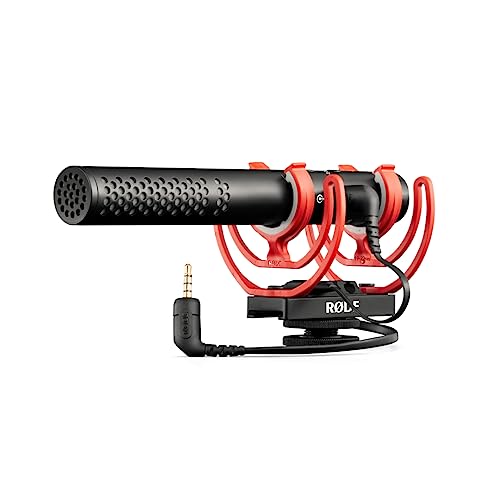
Rode
Rode VideoMic NTG
A shotgun that works on a camera 3.5mm input, over USB, or into a recorder, with a safety channel and a headphone out, which covers every way a solo shooter records sound.
- Power
- USB rechargeable
- Outputs
- 3.5 mm and USB
The single most useful first mic.
Check price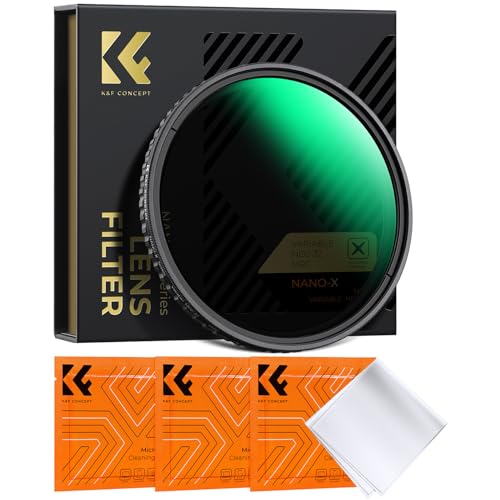
K&F CONCEPT
K&F Concept 82mm Variable ND, 1 to 5 Stops
A 1 to 5 stop range with no cross pattern, which is the safe span for a variable ND: the ugly X appears when you push a wide-range filter to its end.
- Range
- 1 to 5 stops
- Thread
- 82 mm
Use step rings rather than buying one per lens.
Check priceSound, working alone
The radio microphone goes on the subject and the camera shotgun runs at all times as the second source. That is the whole plan, and it is the plan because the two fail differently: a radio link drops, a shotgun goes distant, and they rarely fail in the same instant.
Fit the radio microphone yourself rather than handing it over, if the subject is comfortable with that, because placement is what decides how it sounds and most people clip it too low or against a collar. Ask them to move their phone out of the same pocket, which takes five seconds and removes an entire category of interference.
Record room tone before leaving each location, thirty seconds, everybody still. It is the item most often skipped and most often requested, and on a solo shoot there is nobody else to remember it.
Moving between setups fast
| Situation | What to do | What not to do |
|---|---|---|
| New room, similar light | Adjust the ND, check false colour, roll | Reconfigure the rig or change profile |
| New room, very different light | Reset white balance, recheck exposure on skin | Trust the previous white balance |
| Moving outdoors | Add ND, check the monitor is readable, add the hood | Assume the monitor is still usable |
| Handheld to tripod | Drop the rig onto the plate, level, set counterbalance | Change the rig configuration |
| Subject moving unpredictably | Widen the lens, stop down half a stop | Chase focus at a long focal length |
| Battery below a third | Swap now, between setups | Wait for a natural break that may not come |
That last row is a discipline rather than a technique. On a documentary day the natural break you were waiting for does not arrive, and a battery swap during the moment that mattered is the version of running out of power that hurts most.
What to carry, and what to leave
Carry: the rig configured, two spare batteries, two spare cards, a spare cable of every type in the rig, a Movo CRC11 Camera Rain Cover at around $15, gaffer tape, and a small light. That is the kit that covers what actually goes wrong.
Leave: the matte box, the follow focus, the second lens, the tripod if the day is genuinely mobile, and anything that requires assembly. Each of those is weight and setup time in exchange for a capability you will use rarely on this kind of day.
The rain cover deserves its place on the carry list. Rain is the one hazard a documentary shoot usually cannot reschedule around, and fifteen dollars against a body worth thousands is not a difficult calculation.
Next, from here
- Run and gun starter build
The complete kit, priced and linked.
- Run and gun working build
What changes when the work is paid.
- Narrative set workflow
The opposite approach, and why it inverts.
- Audio for video guide
The two source rule in detail.
- Monitoring and exposure tools
Checking exposure while watching a subject.
- Best wireless microphones
The tool a solo day depends on.
Common questions
- What settings should I lock in before a documentary shoot?
- Frame rate, picture profile, shutter angle, codec, audio routing and card formatting, all decided at home with time rather than in a hallway. Photograph the menu screens once so you can restore them after a firmware update or a reset. Then change as little as possible on location, because a profile changed mid-day produces footage that will not cut with the morning.
- Is autofocus acceptable for professional documentary work?
- It is the correct tool, not a compromise. A subject who decides what happens next changes distance faster than a solo operator can pull focus while also framing. Configure subject tracking so it does not jump to a passer-by, learn its failure modes, and keep a manual override available on the lens for the one shot that needs it.
- How do I handle exposure when a subject moves between rooms?
- Decide in advance which end of the move should be correct, then either ride the variable ND smoothly through the change or let the change happen as a natural exposure shift. A person walking from a window-lit room into a hallway is a three stop change, and reacting to it mid-shot without a plan produces a visible hunt.
- What audio setup works for a solo documentary shooter?
- A radio microphone on the subject as the primary and the camera shotgun running continuously as the second source. The two fail differently, so they rarely fail at the same moment. Fit the radio microphone yourself if you can, since placement decides how it sounds, and ask the subject to move their phone out of the same pocket.
- What should I leave behind on a run and gun day?
- The matte box, the follow focus, the second lens and often the tripod. Each is weight and setup time in exchange for a capability you will rarely use when the subject decides the pace. What to carry instead is spare batteries, spare cards, a spare of every cable in the rig, gaffer tape and a rain cover.
- When should I change batteries on a documentary shoot?
- At the next gap once you drop below about a third, rather than waiting for a natural break. On a documentary day the natural break you were waiting for frequently does not arrive, and running out during the moment that mattered is the version of this failure that actually costs you something. The same rule applies to cards.
Totalling your own rig weight against your gimbal payload? The Camera Rig Build Planner is the paid version of these pages: 8 printable worksheets you fill in with your own numbers, plus the full PDF, $29.