Audio for Video Guide: Levels, Placement and the Two-Source Rule
Short answer
Good location sound comes from proximity and redundancy. Get a capsule within a foot of the mouth, because the ratio of direct sound to room reflection is set by distance and nothing recovers it afterwards, and always record two independent sources so a dropout or a rustle does not cost you the take.
Audiences forgive a soft image and stop watching over bad dialogue, which makes sound the highest-return spend on any rig after exposure. Two principles cover most of it. Proximity: a Rode Wireless PRO capsule six inches from a mouth beats any shotgun three metres away. Redundancy: a second source like the Rode VideoMic NTG on the camera is what makes a bad take recoverable. If the sound is going into a computer rather than the camera, the interface sets the clean gain you have to work with, and [HomeRecordingSetup covers choosing one](https://homerecordingsetup.com/guides/how-to-choose-an-audio-interface/).
Proximity beats everything
The character of recorded dialogue is determined mostly by the ratio of direct sound to reflected sound, and that ratio is set by distance. A capsule six inches from a mouth captures overwhelmingly direct sound. The same capsule at three metres in the same room captures a large proportion of reflections, which is what "distant" and "roomy" actually mean.
No processing recovers this. Reverb can be added and cannot be removed cleanly, because the reflections are mixed into the same signal as the direct sound. This is why a cheap lavalier close in routinely beats an expensive shotgun far away, and it is the most useful single fact in location sound.
The practical implication is that a Saramonic BoomPole Lite Carbon Fibre, 8.2 ft at around $99 does more for your audio than a microphone upgrade at three times the price. Get the capsule closer. Everything else is secondary.
The two-source rule
Always record two independent sources of the same dialogue. On a documentary rig that is usually a radio microphone on the subject and a shotgun on the camera. On a narrative set it is a boom as primary and radio microphones as safety.
The point is not redundancy for its own sake, it is that the two fail differently. A radio microphone fails through dropout, clothing rustle and interference. A boom or camera microphone fails through distance and room. When one fails, the other almost always did not fail at the same moment.
This is also why 32-bit float and internal transmitter recording matter so much. A Rode Wireless PRO recording internally is effectively a third source, on the person, immune to the radio link entirely. Between three recordings, losing a line becomes very unlikely.
Levels, and how 32-bit float changed them
In conventional 24-bit recording, gain is a permanent decision. Too low and you raise noise along with the signal in the edit; too high and the peak clips and the data is gone. Setting it correctly means predicting the loudest sound in a take, which is impossible when somebody laughs.
The traditional practice was to aim for dialogue peaks around minus 12 dBFS with a limiter engaged, which leaves headroom for a surprise. That is still correct advice on any 24-bit recorder and on camera inputs.
A 32-bit float recorder like the Zoom F3 removes the decision entirely, because the format stores a dynamic range far beyond what any microphone or converter produces. Level is set afterwards with no penalty in either direction. For a solo operator who is also running a camera, this is the largest practical improvement in location sound in years.
A complete two-source kit
$239 to $300. A radio system with internal backup, a camera shotgun as the second source, and a 32-bit float recorder if you want the best of both.
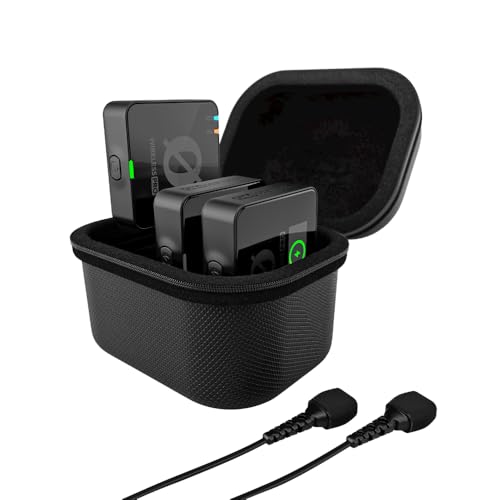
Rode
Rode Wireless PRO
Adds timecode to the same two-transmitter format, which is the cheapest path to synced multicam without a separate timecode box per camera.
- Timecode
- Yes
- Recording
- 32-bit float
The pick if you shoot multicam.
Check price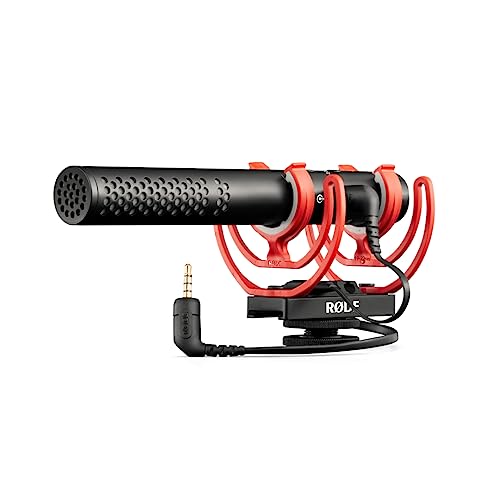
Rode
Rode VideoMic NTG
A shotgun that works on a camera 3.5mm input, over USB, or into a recorder, with a safety channel and a headphone out, which covers every way a solo shooter records sound.
- Power
- USB rechargeable
- Outputs
- 3.5 mm and USB
The single most useful first mic.
Check price
Zoom
Zoom F3
Two channels of 32-bit float with no gain to set, which removes the single most common way a solo shooter ruins location audio.
- Channels
- 2
- Format
- 32-bit float
The pick for a one-boom documentary rig.
Check pricePlacement, by microphone type
| Microphone | Where it goes | Main failure to avoid |
|---|---|---|
| Lavalier on a subject | Sternum, a hand span below the chin, pointing up | Clothing rustle and a phone in the same pocket |
| Boom, dialogue | Just out of frame above the head, pointing at the mouth | Drifting out of position as the actor moves |
| Boom, low position | Below frame pointing up, when overhead is impossible | Picking up floor noise and footsteps |
| Camera shotgun | Shock mounted, pointing where the camera points | Handling noise from the whole rig |
| Room tone | Same position and settings as the dialogue | Forgetting to record it before leaving |
The lavalier row hides the most common ruined recording in this whole category: a mobile phone in the same pocket as the transmitter. A phone hunting for signal produces the classic buzzing interference, and it cannot be fixed afterwards. Asking a subject to move their phone takes five seconds and removes the whole problem.
Wind, handling and the accessories that are not optional
A microphone clipped rigidly to a camera or pole conducts every hand movement, cable rub and footstep straight into the capsule as low frequency thumps. A SmallRig Shotgun Microphone Holder at around $40 suspends it in elastic. Without one, a boomed microphone sounds like a construction site.
Wind is not a nuisance, it is a total failure. Even a light breeze overloads a capsule with low frequency energy that no filter recovers. Foam handles indoor air movement and light breeze; anything more needs a furry cover, and genuinely windy conditions need a blimp.
Budget for both from the beginning. A $239 microphone with no shock mount and no wind protection performs worse in the field than a $100 microphone that has both, which is why people so often conclude their microphone is disappointing when their accessories are the problem.
Room tone, and the habits around it
- Record thirty seconds of room tone in every location, with the same microphone in the same position and at the same settings.
- Do it before you leave, because coming back is impossible and matching a room afterwards is guesswork.
- Ask everybody to hold still and stay silent. Room tone with a shuffle in it is not room tone.
- Slate it verbally so the file is identifiable later without listening to all of them.
- Keep it in the same folder as that location's dialogue, not in a separate audio archive.
- Record it even when you think the dialogue was clean, because it is thirty seconds and the editor will want it.
Room tone is what an editor uses to patch gaps, smooth cuts between takes and cover a removed cough. It is the most commonly skipped item in location sound and the one most frequently requested afterwards, which is a bad combination.
Monitoring, which is not optional either
Wear headphones. Not earbuds, not the camera speaker, and not nothing. A large fraction of location sound failures are audible in real time and inaudible on a meter: a cable crackle, a rustle, an air conditioner that came on, a radio microphone picking up a phone.
Closed-back headphones that seal are the practical requirement, because open ones let the actual room in and you end up judging a mixture of the recording and the reality. It does not need to be expensive; it needs to be sealed and it needs to be worn.
Check at the start of every setup, not only at the start of the day. Cables develop faults, microphones get knocked, and the moment to discover that is before a take rather than in the edit.
Next, from here
- Best shotgun microphones
The second source, compared.
- Best wireless microphones
Proximity, and the backup recording.
- Best field recorders
Preamps, channels and 32-bit float.
- Timecode and sync guide
Keeping dual system sound aligned.
- Narrative working build
Where a full sound kit sits.
- Run and gun workflow
How solo sound actually runs on a day.
Common questions
- What is the single biggest improvement I can make to my audio?
- Get the microphone closer. The ratio of direct sound to room reflection is set by distance, and no processing recovers it afterwards, so a cheap lavalier six inches from a mouth routinely beats an expensive shotgun three metres away. A boom pole at around $99 improves dialogue more than a microphone upgrade at three times the price.
- What level should I record dialogue at?
- On a 24-bit recorder or a camera input, aim for dialogue peaks around minus 12 dBFS with a limiter engaged, which leaves headroom for a surprise laugh. On a 32-bit float recorder the question disappears, because the format captures a dynamic range far beyond what any microphone produces and level is set afterwards with no penalty in either direction.
- Why should I record two microphones?
- Because they fail differently. A radio microphone fails through dropout, clothing rustle and interference; a boom or camera microphone fails through distance and room sound. When one fails, the other usually did not fail at the same moment. On any shoot where you cannot ask for another take, two independent recordings are the actual insurance policy.
- Where should I clip a lavalier microphone?
- On the sternum, about a hand span below the chin, pointing up toward the mouth, clear of collars, necklaces and hair. Loop and tape the cable so a tug pulls on tape rather than the capsule, and run it inside clothing so movement noise is damped. Also ask the subject to move their phone, because a phone in the same pocket produces buzzing interference nothing fixes.
- Do I really need a shock mount and windscreen?
- Yes, both, from the start. A rigidly mounted microphone conducts every hand movement and cable rub into the capsule as low frequency thumps, and even a light breeze overloads a capsule with energy no filter recovers. A $239 microphone without them performs worse in the field than a $100 microphone with them.
- Why does everybody insist on room tone?
- Because an editor needs it to patch gaps, smooth transitions between takes and cover removed noises like a cough, and it cannot be recreated afterwards. Thirty seconds in each location with the same microphone in the same position and settings costs almost nothing on the day. It is the most commonly skipped item and the most commonly requested afterwards.
Totalling your own rig weight against your gimbal payload? The Camera Rig Build Planner is the paid version of these pages: 8 printable worksheets you fill in with your own numbers, plus the full PDF, $29.