Camera Rig Weight Calculator: What You Are Actually Carrying
Short answer
Add every component that leaves the bag as one assembly: body, lens, cage, handle, monitor, microphone, battery, rods and filters. A stripped run and gun rig usually lands between 2.0 and 2.8 kg, a working documentary rig between 3.2 and 4.5 kg, and a full narrative build between 5.5 and 8 kg before the tripod.
Rig weight decides three separate things: whether you can hold it, whether your tripod head can hold it, and whether a gimbal can. This calculator gives you the number once so you can answer all three. If your total is climbing past four kilos, the SmallRig Classic Shoulder Rig Kit at around $170 is the honest next purchase, because a shoulder rig moves the load off your wrists rather than reducing it.
Calculator
Runs in your browser
Enter grams for each part of the rig. The readout gives the camera assembly, the total including what you carry separately, and what the number means in practice.
Camera assembly
0 g
0.00 lb
In your hands
0 g
0.00 lb
Everything carried
0 g
0.00 lb
Handheld
-
Fluid head needed
-
Gimbal class
-
Three different totals, three different decisions
The calculator reports three numbers because they answer three different questions and people constantly conflate them.
- Camera assembly is everything bolted to the camera. This is the number a gimbal cares about and the number a fluid head cares about.
- In your hands adds the shoulder rig or the gimbal itself. This is the number your arms and back care about, and it is always higher than the payload figure a gimbal manufacturer quotes.
- Everything carried adds the tripod. This is the number that decides whether you can walk to the location, which matters more than anyone admits until the third flight of stairs.
What each weight band means in practice
| Camera assembly | Handheld | Support needed |
|---|---|---|
| Under 1.5 kg | Comfortable for long takes, one hand possible | A top handle is enough |
| 1.5 to 2.5 kg | Fine for several minutes at eye level | Handle plus a monitor arm, no shoulder rig required |
| 2.5 to 4 kg | Tiring within a few minutes, arms shake on long takes | A shoulder rig starts to pay for itself |
| 4 to 6 kg | Short bursts only in the hands | Shoulder rig with rear counterweight, not optional |
| Over 6 kg | Not sustainable handheld across a day | Spring arm and vest, or stay on sticks |
Leverage matters more than mass
A rig is a lever and your wrists are the fulcrum. Torque is force multiplied by distance, which means a 400 gram monitor on a 25 centimetre articulating arm loads your wrists roughly five times as much as the same monitor sitting tight against the cage. This is why two rigs weighing exactly the same can feel entirely different, and why "just buy lighter gear" is often the wrong advice.
The practical rules that follow from it: keep the monitor close, keep any battery behind the camera rather than above it, and never mount a heavy accessory on a long arm when a short one reaches. The centre of gravity guide works through the geometry with numbers.
Matching the weight to a fluid head
Capacity classes for fluid heads
Pick the head whose rated capacity sits above your camera assembly figure, not above your camera body figure.

Benro
Benro S4 PRO Flat Base Fluid Head
8.8 lb capacity with two counterbalance steps on a flat base, which fits the stills tripod you already own.
- Capacity
- 8.8 lb
- Base
- Flat
For a bare body and a small lens.
Check price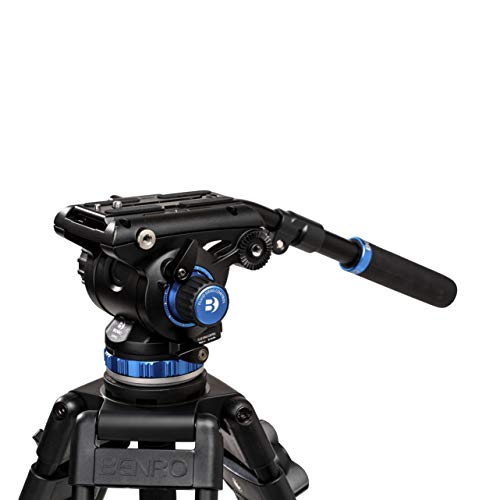
Benro
Benro S6 PRO Fluid Video Head
13.2 lb capacity and six counterbalance steps, enough for a caged mirrorless body with a monitor and a fast zoom.
- Capacity
- 13.2 lb
- Steps
- 6
The value head for a mixed kit.
Check price
Benro
Benro S8 PRO Fluid Video Head
17.6 lb capacity with eight counterbalance steps and a 3/8-16 accessory thread, which covers a cinema body with a matte box and rods.
- Capacity
- 17.6 lb
- Steps
- 8
Buy this if your rig passes 13 lb.
Check priceFluid head capacity is not a safety limit, it is a counterbalance range. A head rated to 8.8 lb with a rig weighing 12 lb will not break, it will simply fail to hold position when you release the pan bar, and the tilt will run away. Equally, a very heavy head with a very light rig cannot be counterbalanced down far enough and the camera nods back at you.
Two more numbers worth knowing. A flat base head bolts to any tripod with a 1/4-20 or 3/8-16 screw and cannot be levelled independently. A bowl base, usually 75mm on smaller systems and 100mm on heavier ones, lets you level the head without adjusting the legs, which on uneven ground saves a genuinely surprising amount of time. The tripod and head guide covers the choice properly.
What to do when the number is too high
Moving the load off your hands
A shoulder rig, a folding rig for transport, and a spring arm and vest for genuinely heavy builds and long days.
SMALLRIG
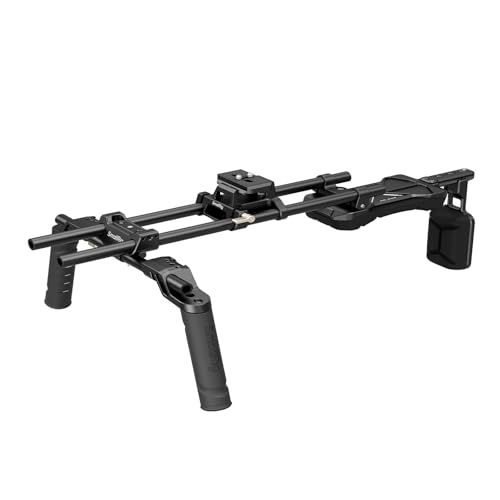
SmallRig Classic Shoulder Rig Kit
A 2.98 lb rig with proper counterbalance behind the shoulder, and rear weight is what actually makes handheld steady rather than merely heavy.
- Weight
- 2.98 lb
The value pick for documentary handheld.
Check price
Tilta
Tilta Lightweight Shoulder Rig
Folds down for transport with dual quick releases, so the same camera can go shoulder to tripod without unbolting anything.
- Feature
- Foldable, dual QR
For operators who move between setups fast.
Check price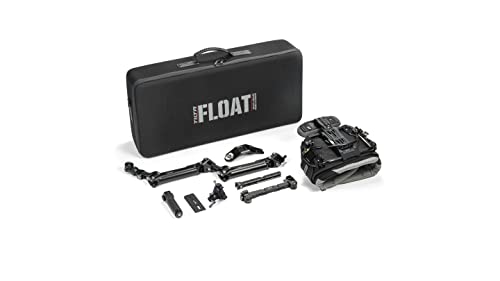
Tilta
Tilta Float Dual Handle Support System
A spring-arm and vest system that takes a heavy build off the shoulder entirely, which is how a long handheld day stops ending in back pain.
- Type
- Arm and vest
Expensive, and transformative for long days.
Check priceIn order of cost effectiveness: remove what you are not using, move mass rearward, then move the load onto your body. The first is free and works more often than people expect. Most rigs carry an accessory that has not been switched on in a month.
The Tilta Float Dual Handle Support System is the endpoint of this path. It is expensive and it is what makes a genuinely heavy build survivable across a full day, which is a durability question rather than a comfort one.
Where the weight goes on each of our builds
The run and gun starter build is deliberately light: a half cage, a small crop zoom and no external battery. The working build adds a V-mount battery, which adds mass but improves balance because it sits behind the camera. The narrative working build is the heaviest per component, because rods, a matte box, a follow focus motor and a lens support all live in front of the lens mount, which is the worst place for weight and the necessary place for those tools.
That contrast is the whole argument for keeping the two ladders separate. Narrative gear is heavy where it hurts most, and it is worth it because the camera is on sticks. Run and gun gear cannot afford the same mass because the camera is in your hands.
Airline and travel weight, briefly
Two limits matter when a rig flies. Lithium batteries over 100 Wh are generally not permitted in carry-on baggage, which is why 99 Wh cells exist and why the SmallRig VB99 Mini V-Mount, 99Wh appears on so many build lists. Carry-on weight allowances themselves are typically 7 to 10 kg, and a full narrative rig plus a laptop passes that easily, so plan on checking the tripod and the stands.
Next, from here
- Gimbal payload calculator
Whether your total fits inside the rating.
- Balance and centre of gravity
Why leverage beats mass.
- Best shoulder rigs
From a basic pad to a spring arm and vest.
- Best fluid heads
Capacity classes and counterbalance ranges.
- Gimbal versus shoulder rig
Which one your weight problem needs.
- Handheld shooting guide
Technique that makes weight matter less.
Common questions
- How heavy is too heavy for a handheld camera rig?
- Most operators can hold 2 to 3 kg at eye level for a few minutes and 4 to 5 kg only in short bursts. Past about 5 kg you need the weight on your body rather than in your hands, which means a shoulder rig, and past about 7 kg you want a spring arm and vest. These are working figures, not physiology, and they vary widely between people.
- Why does my rig feel heavier than the number suggests?
- Because leverage, not mass, is what your arms feel. A 500 gram monitor on a 20 centimetre arm applies far more torque to your wrists than the same 500 grams sitting against the camera body. Two rigs of identical weight can feel completely different depending on how far the mass sits from where you hold it.
- Does rig weight matter on a tripod?
- Yes, for the head rather than for you. A fluid head has a rated capacity and a counterbalance range, and a rig outside that range will either drift when you let go or resist a slow tilt. Weigh the rig as built, including the monitor and any battery, then match it to a head with the capacity above that figure.
- Should I add weight to make a rig more stable?
- Sometimes, and only when it is placed well. Weight behind the camera, such as a V-mount battery on the back, improves handheld balance by moving the centre of mass toward your hands. Weight in front of the lens makes handling worse. That distinction is why a heavier cinema camera can feel steadier than a light mirrorless body.
- What is the heaviest single item on a typical rig?
- The lens, on most mirrorless builds. A fast full frame standard zoom is 700 to 900 grams, which frequently exceeds the body. On cinema builds the battery and the matte box compete for that title, and a matte box with two glass filters plus rods and a lens support can easily pass a kilogram in total.
- How much does a complete rig weigh?
- A stripped run and gun build with a cage, monitor and microphone typically lands between 2.0 and 2.8 kg. A working documentary rig with a V-mount battery and a recorder is usually 3.2 to 4.5 kg. A narrative build with rods, a matte box, a follow focus and a seven inch monitor commonly reaches 5.5 to 8 kg before the tripod.
Totalling your own rig weight against your gimbal payload? The Camera Rig Build Planner is the paid version of these pages: 8 printable worksheets you fill in with your own numbers, plus the full PDF, $29.