Boom vs Lavalier: Which Microphone Approach Your Shoot Needs
Short answer
A boomed microphone sounds better because it captures the voice from a natural distance with the chest resonance intact, and it needs a person to hold it. A lavalier is closer, more consistent and works without a crew, at the cost of clothing rustle and a slightly thinner sound. Professional shoots record both, always.
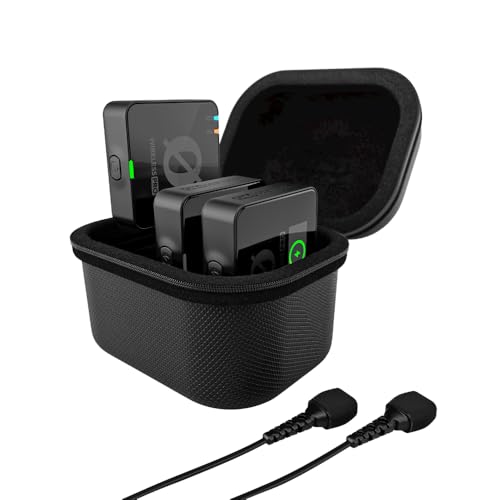
These are presented as alternatives and professional shoots use both, on every take, for a specific reason: they fail differently. A boomed Sennheiser MKE 600 with Shock Mount sounds better and requires a person. A Rode Wireless PRO lavalier is consistent, works alone, and picks up clothing. Recording both means one failure does not cost the line.
Why a boom sounds better
A boomed microphone sits about a foot above the actor, pointing down at the mouth. That distance captures the whole voice, including the chest resonance that gives a voice weight and the natural relationship between the direct sound and a small amount of room. It sounds like a person in a space, which is what an audience expects.
A lavalier sits on the sternum, six inches from the mouth and pointing up past the chin. It is very close, so it is extremely direct, and it is off-axis to the mouth so the high frequencies arrive attenuated. The result is a slightly thinner, more chesty sound that is instantly recognisable once you know to listen for it.
Neither is wrong. A lavalier can be equalised to sound very good, and a boom in a bad room can sound worse than a lavalier in the same room. What the boom gives you is a starting point that needs less work.
The comparison
| Boom | Lavalier | |
|---|---|---|
| Sound character | Natural, full, with the room present | Direct, thinner, very close |
| Needs a person | Yes, a boom operator | No |
| Consistency | Varies with operator position | Fixed relative to the mouth |
| Main failure | Drifting out of position or into frame | Clothing rustle and radio dropout |
| Works when the subject moves | Yes, if the operator follows | Yes, automatically |
| Visible in frame | No, if the operator is good | Sometimes, unless hidden |
| Room tone captured | Yes, naturally | Very little |
| Suits | Scripted work with a crew | Documentary, solo work, multiple speakers |
The room tone row matters more than it looks. A boom captures some of the acoustic of the space, which makes cuts between shots feel like they happen in the same place. Lavalier audio is so dry that scenes cut from lavaliers can feel oddly disconnected, which is one reason mixing the two sources in the edit often sounds better than either alone.
Why you record both
They fail differently and rarely at the same instant. A boom operator loses position or a plane goes over; a lavalier catches a jacket or the radio link drops as somebody walks behind a wall. When one fails, the other almost always has the line.
On a scripted set the priority is boom first, lavalier as safety, because the boom sounds better and the blocking is known so an operator can follow it. On a documentary shoot the priority inverts: lavalier first because there is nobody to hold a boom, with a camera shotgun as the safety.
The modern development that makes this cheap is internal recording in the transmitter. A Rode Wireless PRO records its own backup on the person, immune to the radio link entirely, which means a lavalier now provides two of the recordings by itself.
Both approaches
$99 to $349. A shotgun designed for booming, the pole that gets it close, and a radio system with internal backup recording.

Sennheiser
Sennheiser MKE 600 with Shock Mount
A supercardioid that runs on phantom power or an internal AA, which means it works on a recorder now and on a mixer later.
- Pattern
- Supercardioid
- Power
- 48 V or AA
The value pick for a boom position.
Check price
Saramonic
Saramonic BoomPole Lite Carbon Fibre, 8.2 ft
A carbon pole with an internal XLR cable, and internal cabling is what stops a boom operator from being tangled all day.
- Length
- 8.2 ft
Rode
Rode Wireless PRO
Adds timecode to the same two-transmitter format, which is the cheapest path to synced multicam without a separate timecode box per camera.
- Timecode
- Yes
- Recording
- 32-bit float
The pick if you shoot multicam.
Check priceGetting a boom right
- Position the capsule about a foot above the actor's head, angled down toward the mouth, just out of frame.
- Check the frame with the operator before every take, at the widest focal length in the shot.
- Use a shock mount, always. A microphone clipped rigidly to a pole transmits every hand movement as low frequency thumps.
- Add wind protection outdoors, foam for light air movement and fur for anything more.
- Point at the mouth as the actor turns, following the head rather than the body.
- Keep the pole angled so the cable runs down the inside and cannot slap against it.
The shock mount and windscreen items are not optional accessories. A SmallRig Shotgun Microphone Holder at around $40 is the difference between usable boom audio and a recording of somebody's hands, and no processing fixes the second one.
Getting a lavalier right
Placement decides everything. On the sternum, about a hand span below the chin, pointing up toward the mouth, clear of collars, necklaces and hair. Too low and the voice loses presence; too close to a collar and every head turn produces a rustle.
Loop and tape the cable so a tug pulls on tape rather than on the capsule, and run the cable inside clothing where possible so movement noise is damped by fabric rather than transmitted along a hanging wire. This single step removes most rustle complaints.
Ask the subject to move their phone out of the same pocket as the transmitter. A phone hunting for signal produces the classic buzzing interference, it cannot be fixed afterwards, and it is responsible for a large share of ruined radio microphone recordings.
The verdict
- Scripted work with any crew at all: boom as primary, lavaliers on the actors as safety.
- Solo documentary: lavalier as primary, camera shotgun as safety, because there is nobody to boom.
- Multiple speakers who move independently: lavaliers, one per speaker, so the edit can balance them.
- A single seated interview: boom if a stand or a second person is available, since it will sound better.
- Anything outdoors in wind: lavalier under clothing is often more reliable than a boom fighting the wind.
- Any shoot you cannot repeat: both, recorded separately, which is the actual answer to this question.
The one setup worth calling out is a seated interview shot alone. A boom on a C-stand, positioned once and left, gets you boom quality with no operator, and it is the cheapest sound upgrade available to a solo shooter working in a controlled position.
Next, from here
- Best shotgun microphones
The boom end, compared.
- Best wireless microphones
The lavalier end, compared.
- Audio for video guide
Levels, placement and the two source rule.
- Best field recorders
Where both sources get recorded properly.
- Narrative set workflow
Boom first, radio as safety.
- Run and gun workflow
The documentary inversion.
Common questions
- Does a boom sound better than a lavalier?
- Generally yes. A boom sits about a foot above the actor and captures the whole voice including chest resonance, with a natural relationship to the room, so it sounds like a person in a space. A lavalier is six inches away and off-axis to the mouth, producing a thinner, chestier sound. A lavalier can be equalised well; the boom needs less work.
- Why do professional shoots use both?
- Because they fail differently and rarely at the same moment. A boom operator loses position or an aircraft passes over; a lavalier catches a jacket or the radio link drops behind a wall. When one fails the other usually has the line, which is the only real insurance on dialogue you cannot ask for again.
- How do I stop clothing rustle on a lavalier?
- Position it on the sternum about a hand span below the chin, clear of collars, necklaces and hair, then loop and tape the cable so a tug pulls on tape rather than the capsule, and run the cable inside clothing so movement is damped by fabric. Check by asking the subject to turn their head and shrug before rolling, not after.
- Can I use a boom without a boom operator?
- On a static setup, yes, and it is the cheapest sound upgrade available to a solo shooter. Mount the microphone on a C-stand with a boom arm, position it a foot above the subject pointing down at the mouth, and leave it. It gets you boom quality with nobody holding it, as long as the subject stays put.
- Do I need a shock mount for a boom?
- Yes, always. A microphone clipped rigidly to a pole conducts every hand movement, cable rub and grip adjustment straight into the capsule as low frequency thumps, and no processing removes them. A shock mount at around $40 suspends the microphone in elastic. Wind protection is equally non-negotiable outdoors, since even light breeze overloads a capsule.
- Which approach for a documentary shoot?
- Lavalier as primary, because there is usually nobody to hold a boom, with the camera shotgun running continuously as the second source. Modern radio systems that record an internal backup on the transmitter provide two of the recordings by themselves, which makes a solo documentary sound plan genuinely robust for the first time.
Totalling your own rig weight against your gimbal payload? The Camera Rig Build Planner is the paid version of these pages: 8 printable worksheets you fill in with your own numbers, plus the full PDF, $29.