Best Light Modifiers for Video in 2026
Short answer
The best light modifier for most setups is a large softbox, and the SmallRig 35 inch Bowens softbox at around $68 is the value pick, because softness is determined by the apparent size of the source and 35 inches at close range is genuinely soft. For a source that wraps in every direction, the amaran Lantern 65 at $69 is the better tool in a small room.
A modifier changes light more than a different fixture does, and it costs less. The SmallRig 35-inch Bowens Softbox at around $68 is the pick because apparent source size is what makes light soft, and 35 inches close to a subject is genuinely soft. The amaran Lantern 65 Softbox at $69 wraps light in every direction, which suits small rooms, and the Westcott Scrim Jim Cine 4x4 Kit at $330 is the frame that turns any source into a very large one.
What makes light soft, in one paragraph
Softness is determined by the apparent size of the source as seen from the subject, and nothing else. A large source at close range wraps around a face and produces shadows with gradual edges. The same source moved far away becomes small in the subject's sky and produces hard shadows with crisp edges. This is why the sun, which is enormous, produces hard shadows: at that distance it is a small disc.
The two levers are therefore size and distance, and distance is free. Moving a modest softbox from two metres to one metre roughly doubles its apparent size and produces a visibly softer result, at the cost of four times the intensity, which you handle by turning the light down.
That gives you the practical rule: buy the largest modifier you can position, then get it as close to the subject as the frame allows. Almost every complaint about harsh lighting is a modifier that is too far away rather than too small.
The three shapes that matter
$68 to $330. A softbox for a directional soft key, a lantern for omnidirectional wrap, and a frame for a very large source.

SMALLRIG
SmallRig 35-inch Bowens Softbox
A large quick-release octabox, and size is the only thing that actually makes light soft, so bigger beats clever here.
- Size
- 35 in
- Mount
- Bowens
The value pick for interview keys.
Check price
Amaran
amaran Lantern 65 Softbox
An omnidirectional lantern that turns one COB into a soft ambient source for a whole room, which is the fastest way to light a scene that has people moving in it.
- Mount
- Bowens
- Size
- 65 cm
Soft everywhere means little control.
Check price
Westcott
Westcott Scrim Jim Cine 4x4 Kit
A modular 4x4 frame with diffusion and a silver or white bounce, which is the tool that makes a hard light behave like a window.
- Size
- 4 x 4 ft
- Fabrics
- Diffusion, bounce
Needs two stands and sandbags.
Check priceSoftbox, lantern, frame or spot
| Modifier | What it produces | Light lost | Best for |
|---|---|---|---|
| Softbox with grid | Soft, directional, controlled spill | 1.5 to 2 stops | A key light on a set |
| Softbox without grid | Soft, spills widely | 1 to 1.5 stops | Filling a small room quickly |
| Lantern | Soft in every direction | 1.5 to 2 stops | Overhead source, small rooms, ambience |
| Frame with diffusion | Very large and soft, adjustable strength | 1 to 3 stops | The softest key available |
| Frame with solid | Blocks light, creating negative fill | All of it, deliberately | Shaping a face without a second light |
| Spotlight or fresnel | Hard, focused, projectable | 1 to 2 stops | Backlight, shafts, gobo patterns |
The frame with a solid is the entry every beginner kit is missing. Blocking light on the shadow side of a face deepens contrast and shapes the features far better than adding a second light does, and a black cloth on a stand achieves it for almost nothing. It is the cheapest genuine improvement in a lighting kit.
Grids, and why spill control matters
A softbox without a grid throws light in every forward direction, so it lights the subject and also the wall behind them, the ceiling, and the floor. That bounced light returns as uncontrolled fill, which flattens the contrast you were trying to create.
A grid is a honeycomb fabric insert that restricts the emission angle, typically to 40 or 30 degrees. The light on the subject barely changes; the light on everything else drops dramatically. That means the background can be lit separately and deliberately, which is most of what makes a lit scene look designed rather than illuminated.
A grid costs about one third of a stop and it is nearly always worth it. If a softbox is available with or without one, buy it with one. In small rooms, where every surface bounces light back, it is the difference between a controlled image and a flat one.
Shaping without adding lights
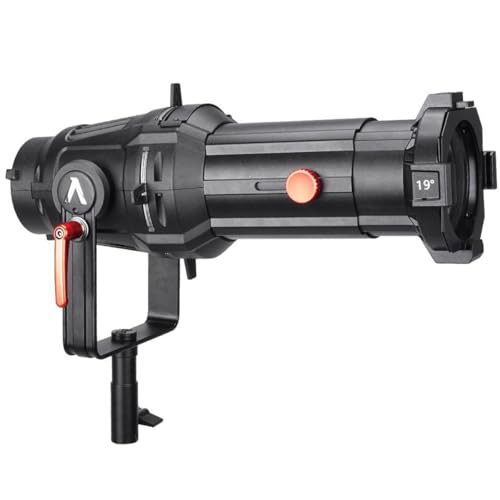
The Aputure Spotlight Mount with 19 Degree Lens at around $424 is a different kind of modifier: an optical attachment that focuses a COB into a hard, controllable beam that can project a shape through a gobo. It is what puts a shaft of light across a wall or a window pattern on a floor, and no amount of soft light achieves that.
This is worth understanding as a category. Most modifiers make light softer and larger. A spotlight makes it harder and smaller, which is what you need for backlight, for separation and for anything that should look like a hard source in the world of the scene.
The narrative kit that works has both: one soft key through a large modifier, and one hard controlled source for backlight and shape. A kit of two soft sources tends to produce flat, evenly lit images, which is the most common failure of a first lighting purchase.
Hard light and what holds it
The optical attachment for a shaped beam, and the stand and ballast that make a boomed modifier safe.
Aputure
Aputure Spotlight Mount with 19 Degree Lens
An optical snoot that turns a COB into a controllable beam for gobos and hard slashes of light, which is the opposite job to a softbox.
- Beam
- 19 degrees
Loses a lot of output. Bring a big light.
Check price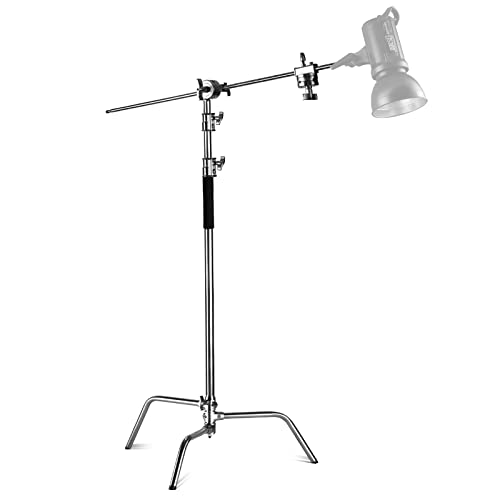
NEEWER
NEEWER Pro Stainless C-Stand with Boom Arm
The heavier version with a turtle base, which is what you want under a 4x4 frame in any kind of breeze.
- Base
- Turtle
For frames and heavy fixtures.
Check price
Aimosen
Sandbag Weight Bags, Four Pack
The cheapest insurance on set. A C-stand with a light on an arm falls over, and it falls onto a person.
- Quantity
- 4
Mounting and safety
A 35 inch softbox is a sail. Indoors it catches every draught from a door or an air conditioning vent, and outdoors it is a genuine hazard. Every stand carrying a modifier of any size needs a sandbag on the leg under the arm, and a Sandbag Weight Bags, Four Pack set at around $16 is not optional equipment.
A NEEWER Pro Stainless C-Stand with Boom Arm rather than a light stand matters here, because a boomed modifier positions the load off-axis from the base, which is precisely the job a C-stand is designed for and precisely the job a light stand is not.
Assemble a softbox before the shoot day, at least once. Speedring designs vary, some require the rods to be bent into place under tension, and discovering that in front of a client is a bad use of ten minutes.
How we chose
These picks come from published dimensions, mount standards, stated diffusion layers and grid availability, and verified owner reviews describing assembly and durability. We did not have every one of these modifiers in our hands and will not claim otherwise.
The criteria in order: size relative to a subject at working distance, mount compatibility with the Bowens standard, whether a grid is available, and how quickly the thing assembles. Brand mattered least, because a modifier contains no electronics and a well-made one from any brand lasts a decade.
Next, from here
- Best COB lights
The fixtures these attach to.
- Three point lighting guide
Where each source goes and why.
- Best C-stands
What safely holds a boomed modifier.
- Best LED panel lights
Soft light with no modifier at all.
- Best diffusion filters
Diffusing the lens instead of the light.
- Narrative pro build
Where a full grip and lighting package sits.
Common questions
- What actually makes light soft?
- The apparent size of the source as seen from the subject, and nothing else. A large source close to a face wraps around it and produces gradual shadow edges. The same source moved far away becomes small in the subject's sky and produces hard shadows. That is why the sun, which is enormous, casts hard shadows: from Earth it subtends a very small angle.
- How big a softbox do I need?
- Roughly the size of your subject, positioned as close as the frame allows. For a head and shoulders interview, a 35 inch box a metre away is genuinely soft. Buying a larger box and then placing it three metres back undoes the benefit entirely, because distance shrinks apparent size. Buy the largest modifier you can actually position, then move it closer.
- Do I need a grid on my softbox?
- Almost always, yes. A grid restricts the emission angle so the light on the subject barely changes while the light spilling onto walls, ceiling and floor drops sharply. That uncontrolled bounce returns as fill and flattens the contrast you were creating. A grid costs about a third of a stop and is the difference between a controlled image and a flat one in small rooms.
- What is negative fill and why does it matter?
- It is a solid black surface placed on the shadow side of a subject to absorb ambient light that would otherwise bounce back and lift the shadows. It deepens contrast and shapes a face better than a second light does, and a black cloth on a stand achieves it. It is the cheapest genuine improvement available in a lighting kit and the item most first kits are missing.
- Softbox or lantern?
- A softbox is directional, so it lights the subject and can be controlled with a grid, which suits a key light on a set. A lantern emits in every direction, filling a small room with soft ambient light from a single overhead position, which suits dialogue scenes in tight interiors. They are different tools, and a working kit that lights interiors often carries both.
- Are expensive modifiers worth it?
- Less than in almost any other category, because a modifier contains no electronics and a well-made one from any brand lasts a decade or more. What matters is size, mount compatibility with the Bowens standard, grid availability and how quickly it assembles. Spend the difference on a second stand and a set of sandbags, which will improve your images more than a premium fabric will.
Totalling your own rig weight against your gimbal payload? The Camera Rig Build Planner is the paid version of these pages: 8 printable worksheets you fill in with your own numbers, plus the full PDF, $29.