Sensor Size and Crop Factor Chart: Every Format and Its Lens Equivalence
Short answer
Crop factor is the ratio of a full frame diagonal to the sensor diagonal, and it converts focal lengths between formats. Super 35 is about 1.5x, so a 35mm lens frames like a 52mm on full frame. Micro Four Thirds is 2.0x, so a 25mm lens frames like a 50mm. The same factor applies to effective depth of field.
Crop factor turns a focal length on one sensor into the equivalent on another, and it is the number that makes lens advice portable between cameras. The Sony FX30 at Super 35 and the Sony FX3 at full frame are the same camera at two sizes, which makes them the clearest possible illustration. The tables below cover every common format.
The sensor size table
| Format | Approximate dimensions | Diagonal | Crop factor |
|---|---|---|---|
| Full frame | 36 x 24 mm | 43.3 mm | 1.0x |
| Full frame open gate 3:2 | 36 x 24 mm | 43.3 mm | 1.0x |
| Super 35 (4-perf) | 24.9 x 18.7 mm | 31.1 mm | 1.39x |
| Super 35 (16:9 video) | 24.6 x 13.8 mm | 28.2 mm | 1.53x |
| APS-C, Sony and Nikon | 23.5 x 15.6 mm | 28.2 mm | 1.53x |
| APS-C, Canon | 22.3 x 14.9 mm | 26.8 mm | 1.61x |
| Micro Four Thirds | 17.3 x 13.0 mm | 21.6 mm | 2.0x |
| Super 16 | 12.5 x 7.4 mm | 14.5 mm | 2.98x |
| 1 inch | 13.2 x 8.8 mm | 15.9 mm | 2.72x |
Note that Super 35 has two entries. The traditional 4-perf film frame and the 16:9 video crop most cameras actually use have different aspect ratios and therefore different diagonals, which is why you see both 1.4x and 1.5x quoted for Super 35 in different sources. For video work, 1.5x is the number to use.
Focal length equivalence
| Full frame | Super 35 (1.5x) | Micro Four Thirds (2.0x) | What it is for |
|---|---|---|---|
| 14 mm | 9 mm | 7 mm | Extreme wide, architecture, dramatic close work |
| 16 mm | 11 mm | 8 mm | Wide interiors, establishing |
| 24 mm | 16 mm | 12 mm | The documentary default, wide enough to move with |
| 28 mm | 19 mm | 14 mm | Environment with a subject |
| 35 mm | 24 mm | 18 mm | Two shots, walk and talk |
| 50 mm | 35 mm | 25 mm | Neutral perspective, conversation coverage |
| 85 mm | 55 mm | 42 mm | Close ups, interview singles |
| 135 mm | 90 mm | 67 mm | Long lens isolation, observational distance |
Read this table in whichever direction you need. Somebody recommending a 24mm for documentary work on full frame is recommending a 16mm on Super 35 and a 12mm on Micro Four Thirds. The crop factor calculator does the arithmetic for any focal length and any sensor combination.
What crop factor does and does not convert
It converts field of view exactly. A 35mm lens on a 1.5x sensor frames identically to a 52.5mm lens on full frame, and this is a geometric fact rather than an approximation.
It converts equivalent depth of field, by the same factor applied to the aperture. A 35mm at f/2 on Super 35 gives roughly the same framing and depth of field as a 52mm at f/3 on full frame. This is why full frame is described as giving a shallower look at the same framing.
It does not convert aperture for exposure. An f/2 lens is an f/2 lens on any sensor, and it transmits the same amount of light per unit area regardless of format. A light meter reading does not change with sensor size, and this is the single most common misunderstanding in the whole topic.
Three formats, three bodies
$1,798 to $4,298. Super 35, Micro Four Thirds and full frame, so the crop factors above are attached to real cameras.

Sony
Sony FX30
The Super 35 version of the FX3 body, with the same cage ecosystem, the same XLR handle and the same Type A media requirement.
- Sensor
- Super 35
- Media
- CFexpress Type A / SD
Panasonic
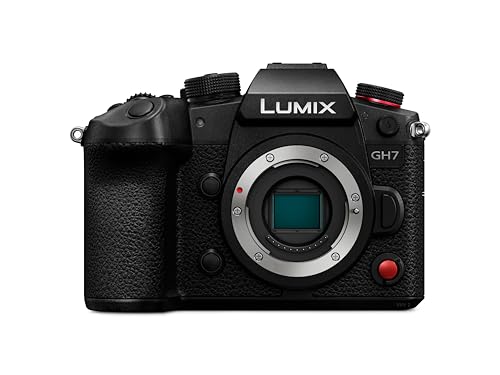
Panasonic Lumix GH7
Internal ProRes RAW to an SSD and 32-bit float audio with the XLR2 adapter, in the smallest body that does either.
- Sensor
- Micro four thirds

Sony
Sony FX3
Full frame with active cooling and a detachable XLR handle, which is why it is the default solo documentary body.
- Sensor
- Full frame
- Media
- CFexpress Type A / SD
Lens coverage, which is separate
Crop factor tells you how a lens will frame. Coverage tells you whether the lens produces an image circle large enough to fill the sensor at all, and these are independent constraints.
A full frame lens covers every smaller sensor with room to spare, which is why adapting full frame glass down always works and simply crops the field of view. A Super 35 lens on a full frame sensor vignettes, unless the camera offers a crop mode, which most full frame cinema bodies do.
This matters when buying a matched cine set. The Sirui Night Walker S35 T1.2 Cine Set (24, 35, 55mm) covers Super 35, so it is native on an FX30 or a Blackmagic Pocket body and needs a crop mode on an FX3. That effectively turns the more expensive body into the cheaper one for those lenses, which is a real consideration rather than a footnote.
Practical consequences by format
- Full frame: about a stop better in low light, shallower depth of field at the same framing, larger and more expensive lenses, and the most demanding format for holding focus.
- Super 35: the classic cinema frame, extensive and affordable cine glass, smaller lenses, and depth of field that is easier to work with on a moving subject.
- APS-C: effectively identical to Super 35 for video, with a huge selection of affordable autofocus glass designed for stills.
- Micro Four Thirds: the smallest and cheapest lenses, the most depth of field at a given aperture, and the format where a wide angle is genuinely hard to achieve.
- Super 16: a vintage look with very small lenses, mostly encountered on older or specialty cameras.
- One inch: found in compact and drone cameras, where the format is a consequence of size rather than a choice.
The wide angle point on Micro Four Thirds is worth expanding. A 24mm equivalent means a 12mm lens, and lenses shorter than about 12mm are expensive and often distorted. On the smallest formats, a genuinely wide field of view is the hardest thing to buy cheaply.
Next, from here
- Crop factor and field of view calculator
Any focal length, any sensor.
- Depth of field calculator
What changes besides the framing.
- Full frame versus Super 35
The decision in full.
- Best cinema cameras
Which bodies use which format.
- Lens mounts and adapters
Coverage, flange distance and adapting.
- Best lenses for video
Choosing glass once the format is settled.
Common questions
- What is crop factor?
- The ratio of the full frame sensor diagonal, 43.3mm, to the diagonal of the sensor in question. It converts focal lengths between formats, so on a 1.5x sensor a 35mm lens frames identically to a 52.5mm lens on full frame. It is a geometric fact rather than an approximation, and it applies equally to any lens on that sensor.
- What is the crop factor of Super 35?
- About 1.5x for the 16:9 video crop most cameras actually use, and about 1.4x for the traditional 4-perf film frame, which has a different aspect ratio and therefore a different diagonal. For video work, use 1.5x. That is why different sources quote both numbers for what sounds like the same format.
- Does crop factor change my aperture?
- Not for exposure. An f/2 lens transmits the same light per unit area on any sensor, and a light meter reading does not change with format. Crop factor applies to aperture only when comparing equivalent depth of field: a 35mm at f/2 on Super 35 gives roughly the same framing and depth of field as a 52mm at f/3 on full frame.
- What full frame focal length matches a 35mm on Super 35?
- About 52mm, since Super 35 has a crop factor of roughly 1.5x for video. That is why a 35mm is the standard conversational focal length on Super 35 while a 50mm fills the same role on full frame, and why lens recommendations are only portable between cameras once the crop factor is applied.
- Will a Super 35 lens work on a full frame camera?
- Only in a crop mode, which most full frame cinema bodies provide. At full sensor width it vignettes, because the image circle is too small. Coverage is a separate constraint from crop factor: crop factor tells you how a lens frames, coverage tells you whether it fills the sensor at all, and both must be satisfied.
- Which sensor size is best for video?
- Super 35 for most people, because it is the classic cinema frame, affordable matched cine sets cover it, and its lenses are smaller and cheaper. Full frame buys about a stop of low light and a shallower look at a substantial price premium on both bodies and glass. Neither is a quality difference, and lighting changes the image more than either.
Totalling your own rig weight against your gimbal payload? The Camera Rig Build Planner is the paid version of these pages: 8 printable worksheets you fill in with your own numbers, plus the full PDF, $29.