Best Gimbals for Mirrorless Cameras in 2026
Short answer
The best gimbal for most mirrorless rigs is the DJI RS 4 at under $500, because its 3 kg rated payload leaves genuine headroom for a caged full-frame body with a fast zoom, and the second-generation axis locks make rebalancing after a lens change a matter of seconds. If your rig is under 2 kg and stays there, the DJI RS 3 Mini at under $250 saves you both money and weight.
A gimbal is bought on payload and abandoned over balancing. The pick for most mirrorless rigs is the DJI RS 4 at under $500 because 3 kg rated is the first tier with real headroom over a caged body and a fast zoom, and because rebalancing it is quick enough that you will actually do it. Under 2 kg the DJI RS 3 Mini at under $250 is honest and light. Over 3 kg you are in RS 4 Pro territory and should check the numbers before spending.
Rated payload is a ceiling, not a target
Every gimbal is sold on a rated payload, and that number is the mass the motors can hold against gravity when the load is correctly balanced. It is not the mass at which the gimbal works well. A stabiliser running at its rated limit has no torque left for a fast move, heats up, drains its battery faster and produces a soft, lagging correction rather than a crisp one.
The working rule is to stay at roughly 70 to 80 percent of rated payload. On a 3 kg gimbal that means a rig of about 2.1 to 2.4 kg, which is a caged full-frame body, a fast standard zoom, a small microphone and nothing else. Add a monitor and a battery plate and you have left that window without noticing.
Work out your actual number before buying anything. The rig weight calculator adds up the body, lens, cage, monitor, microphone, batteries and card, and the gimbal payload calculator tells you what headroom that leaves against a specific model. Those two numbers together prevent the single most expensive mistake in this category, which is buying a stabiliser that cannot carry the rig you already own.
Light class, 2 to 3 kg rated
Under $250 to under $500. These carry a bare or lightly caged body with a small lens. They do not carry a monitor as well, whatever the number on the box suggests.
DJI
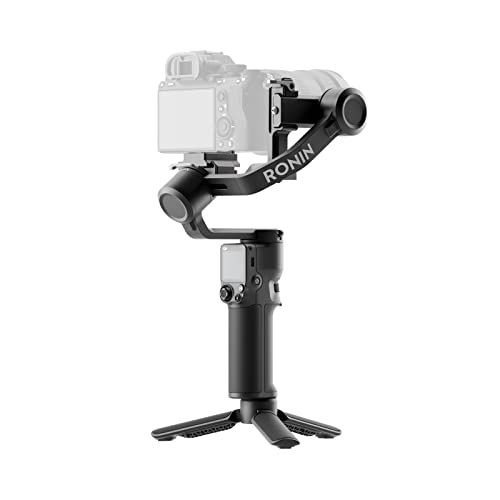
DJI RS 3 Mini
The lightest way into a stabilised camera, rated for 2 kg, which is a mirrorless body and one small prime and nothing else.
- Rated payload
- 2 kg / 4.4 lb
- Axis
- 3-axis
Do not plan to hang a monitor on this.
Check price
DJI
DJI RS 4 Mini
A 2 kg-class gimbal with automated axis locks and a tracking module option, aimed at a solo operator carrying it all day.
- Rated payload
- 2 kg / 4.4 lb
Good for travel and events, tight on payload.
Check price
ZHIYUN
Zhiyun Weebill 3S
Rated for 3 kg with a built-in sling grip and fill light, and it is the cheapest way to balance a full-frame body with a fast zoom.
- Rated payload
- 3 kg / 6.6 lb
The value choice if you are not in the DJI ecosystem.
Check priceThe balancing problem, which is the real cost
A gimbal has to be balanced on three axes before the motors are switched on, and it has to be rebalanced every time the load changes. A lens swap changes the load. Adding a filter changes the load. Sliding the camera back to fit a cable changes the load. This is the part that decides whether a gimbal lives on your rig or in a case.
This is why the mechanism matters more than the specification. The DJI RS 4 has a teflon-coated tilt axis so the camera slides smoothly under fingertip pressure instead of stepping, and second-generation locks on all three axes so the assembly holds still while you adjust one axis at a time. That sounds like a detail and it is the difference between thirty seconds and five minutes, repeated a dozen times a day.
The practical workaround is to standardise. Pick one lens for gimbal work, mark the plate position with a scratch or a strip of Lockport Black Gaffer Tape, 2 inch (2-pack), and you can rebuild the balance in seconds from memory. Operators who use gimbals heavily nearly all do this, and it is more useful than any feature on any gimbal.
Working class, 3 to 4.5 kg rated
Under $500 to under $1,000. This is where a caged full-frame body with a fast zoom belongs, and where a small cinema body starts to be possible.

DJI
DJI RS 4
The 3 kg workhorse, with second-generation axis locks and a teflon-coated tilt arm so rebalancing after a lens change takes seconds rather than minutes.
- Rated payload
- 3 kg / 6.6 lb
- Focus motor
- Optional
The pick for most mirrorless documentary rigs.
Check price
ZHIYUN
Zhiyun Crane 4
Handles heavier bodies than the 3 kg class and includes a fill light and sling handle, so it covers cinema-camera builds without going to a pro gimbal price.
- Class
- Above 3 kg
Consider it if your build is over 3 kg.
Check price
DJI
DJI RS 4 Pro
Rated for 4.5 kg with a carbon fibre axis arm and native support for LiDAR focus, which is the version that carries a cinema body with a matte box and a monitor.
- Rated payload
- 4.5 kg / 10 lb
- Focus
- LiDAR compatible
Overkill for a bare mirrorless body.
Check priceCounterweights, and the trick that saves a purchase
A gimbal fails to balance for two different reasons, and only one of them is weight. The other is geometry: a long, heavy lens puts the centre of mass too far forward for the tilt axis to reach, and the gimbal cannot balance a load it cannot physically position, even when the total mass is well inside the rating.
A SmallRig Removable Gimbal Counterweight, 200g at under $50 fixes that. Adding 200 g at the back of the plate moves the centre of mass rearward into the adjustable range, so a rig that would not balance now balances, at the cost of 200 g of payload you did have spare. This costs twelve dollars and regularly saves a five hundred dollar upgrade.
The place it does not help is when you are genuinely over the rated mass. Adding weight to an overloaded gimbal makes it worse in every respect. Check which problem you have before reaching for the fix.
What a gimbal does not do
| People expect | What actually happens | What to do instead |
|---|---|---|
| Smooth footwork | The gimbal removes rotation, not your vertical bounce as you walk | Learn a heel-to-toe roll, or use a support vest |
| Fixes handheld shake at long focal lengths | Micro-jitter is amplified by focal length faster than it is corrected | Shoot wider, or use sticks |
| Works straight out of the bag | Every load change needs a rebalance | Standardise one lens and mark the plate |
| Replaces a tripod | A gimbal drifts and cannot hold a locked frame | Own both. They do different jobs |
| Carries the rated payload | It holds that mass but has no torque margin left | Plan for 70 to 80 percent of rated |
| Makes the shot look professional | A pointless move looks worse than a static frame | Move only when the shot has a reason to |
The vertical bounce point is the one that surprises people most. Three axis stabilisation corrects pan, tilt and roll. It does not correct translation, so the up-and-down movement of your body as you walk goes straight into the shot. That is what a support vest, or a slower roll through the foot, is actually for.
Support: when the gimbal starts to hurt
A 3 kg rig on a 1.3 kg gimbal held out in front of you is roughly 4.3 kg on an extended lever arm, and the human forearm gives out long before the battery does. Twenty minutes is a realistic ceiling for most people, and the shots get worse well before then.
The cheap answer is the Tilta Lightweight Dual Handle Gimbal Support at under $250 which converts a single-grip hold into a two-handed one and lets your arms share the load. The better answer for a long day is the Tilta Lightweight Gimbal Support Vest at under $250, which transfers the mass to your hips.
This is a cost people forget when comparing a 2 kg gimbal build with a 3 kg one. The heavier rig is not just harder to buy for, it is harder to operate for a full day, and the support gear that fixes that is a real line item.
Support and grip
Under $50 to under $250. What turns twenty minutes of usable operating into a full day of it.

Tilta
Tilta Lightweight Dual Handle Gimbal Support
A dual handle bar that spreads a gimbal across both arms, which steadies low-mode moves far more than any motor setting will.
- For
- DJI RS series
Adds bulk to a small gimbal.
Check price
Tilta
Tilta Lightweight Gimbal Support Vest
Moves a gimbal's weight to your hips, which is the cheapest fix for the real limit on gimbal work, which is your arms and not the motors.
- For
- DJI RS series
Buy this before a bigger gimbal.
Check price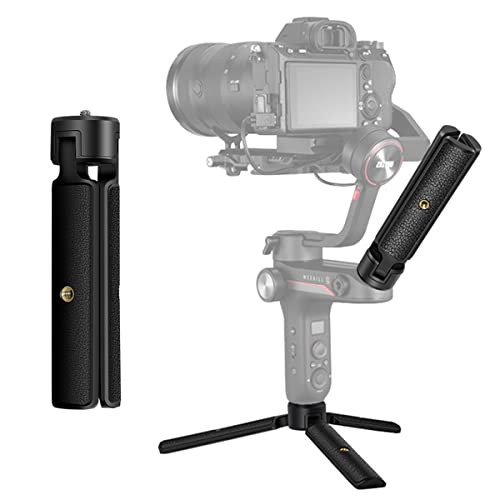
EaxanPic
EaxanPic Extended Grip and Tripod for Gimbals
A 2 in 1 grip and tabletop tripod that turns a gimbal into a low-mode handle and a standing support, the first accessory most gimbal owners actually need.
- For
- DJI RS series
Buy it with the gimbal.
Check priceWhen not to buy a gimbal at all
If your work is interviews, product, talking head, or anything on sticks, a gimbal buys you nothing. It is the most visible purchase in this hobby and among the least useful for a lot of the work people actually do. The starter run and gun build deliberately has no gimbal on it for exactly this reason.
If your body has good in-body stabilisation and you shoot wide, a gimbal is often solving a problem that has already been solved. Modern IBIS combined with a 24mm lens and a considered walk produces footage that most viewers cannot distinguish from a stabilised shot, at zero weight and zero balancing.
And if your exposure or your audio are not yet solved, they come first. Every ranked list on this site puts movement sixth, because a beautifully stabilised shot with clipped highlights and unusable sound is still a failed shot.
How we chose
These picks come from published payload ratings, stated axis mechanics and lock designs, battery specifications and verified owner reviews describing long-term balancing and handling. We did not have every one of these gimbals in our hands and will not claim otherwise.
The criteria in order: rated payload against realistic rig weights, how fast the thing rebalances, battery runtime, whether it supports a focus motor, and how it handles being carried for hours. Feature counts and app functionality came last, since they do not decide whether a gimbal gets used.
Next, from here
- Gimbal payload calculator
Your real rig weight against a specific model rating.
- Rig weight calculator
Add up the body, cage, lens, monitor and cells first.
- How to balance a gimbal
The three axis sequence, in the order that works.
- Gimbal versus shoulder rig
Two answers to camera movement, for different shots.
- Payload chart for every model
Rated figures and the safe working load beneath them.
- Run and gun working build
The tier where a gimbal first earns its place.
Common questions
- What payload gimbal do I need for a mirrorless camera?
- Add up your actual rig and target 70 to 80 percent of the gimbal rating. A caged full-frame body with a fast standard zoom is typically 2.0 to 2.4 kg, which puts it in the 3 kg class rather than the 2 kg class. A bare crop body with a small prime can genuinely live on a 2 kg gimbal. A rated payload is a motor torque limit reached at perfect balance, not a comfortable operating point.
- Why will my gimbal not balance even though it is under the payload?
- Because the problem is geometry, not mass. A long or front-heavy lens can push the centre of mass beyond the range the tilt axis can physically reach, so no amount of sliding brings it into balance. A 200 g counterweight on the rear of the plate moves the centre of mass back into the adjustable range and usually fixes it for around twelve dollars, as long as you are genuinely under the rated mass.
- Does a gimbal remove the bounce from walking?
- No. A three axis gimbal corrects pan, tilt and roll, which are rotations. The vertical translation of your body as you walk is not a rotation, so it passes straight through to the shot. Fixing it means changing how you move, using a heel-to-toe roll with bent knees, or transferring the rig to a support vest that decouples it from your stride.
- How long can I actually hold a gimbal?
- Roughly twenty minutes for most people with a 3 kg rig, and the shots deteriorate well before the arms give out, because a rig held out in front of you is a load on an extended lever. A dual handle at under $250 lets both arms share the load, and a support vest at under $250 transfers the mass to your hips. Budget for one of them on any build over about 2.5 kg.
- Should I buy a gimbal before a monitor?
- Almost never. A monitor with false colour prevents unrecoverable exposure mistakes, and a gimbal improves shots you would otherwise still have. Every build ladder on this site puts movement gear sixth, after body, exposure, sound, power and media, because a beautifully stabilised shot with clipped highlights and bad audio is still unusable footage.
- Is in-body stabilisation enough instead of a gimbal?
- Often, at wide focal lengths and walking slowly. Modern in-body stabilisation combined with a 24mm or wider lens and a deliberate walk produces footage many viewers cannot distinguish from a stabilised shot, with no weight and no balancing. It stops being enough at longer focal lengths, where small angular errors are magnified, and on any move that involves changing direction quickly.